
Wildflower Elopement Locations in Washington by Month: The Complete Seasonal Guide
You’ve seen the photos: couples in wildflower meadows with dramatic mountain peaks behind them, golden light, that soft glow all around. Washington has wildflowers (like, a lot of them). But finding the right location at the right time - and knowing how to photograph it without stepping off-trail - takes more than just showing up and hoping for the best. Here’s the real breakdown: where to elope among wildflowers across Washington State, when each area has peak blooms and in what month and season, and how I make the magic happen as your photographer.

Washington Wildflower Types & What You'll See by Elevation ⭐
Here’s the thing most people don’t know about Washington wildflowers: blooms across the state happen in different months at different elevations, some as early as March, and some won’t even start to blossom until late July!
The trick is matching your elopement date to the right elevation and location. March wildflowers around Seattle (like cherry blossoms 🌸) are so different from the mountain heather and fireweed you’ll find at high elevations. Let’s break down what you’ll see!
Low to Mid-Elevation: March through June
Cherry blossoms, arrowleaf balsamroot, azaleas, wild daisies, even some lupines!
You’ll see these flowers popping up in accessible places: the University of Washington campus and throughout Seward Park in Seattle, the Columbia River Gorge east of Portland, and plenty of places you can reach without serious snow or elevation gain. They’re the first sign that Spring is here and that we’ve made it through the winter. It’s almost like I can feel a palpable change in the energy once these flowers are blooming!
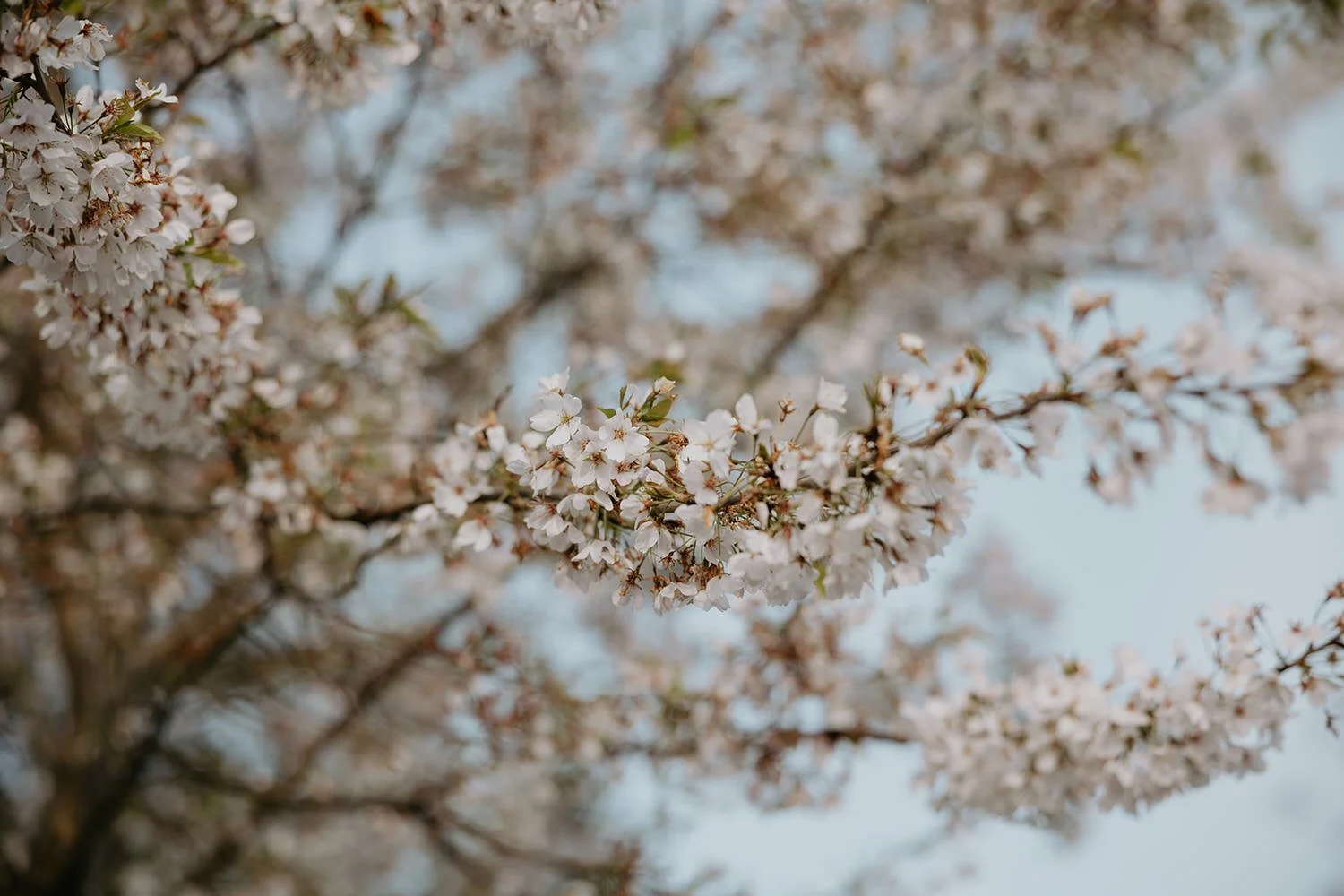
Cherry Blossoms
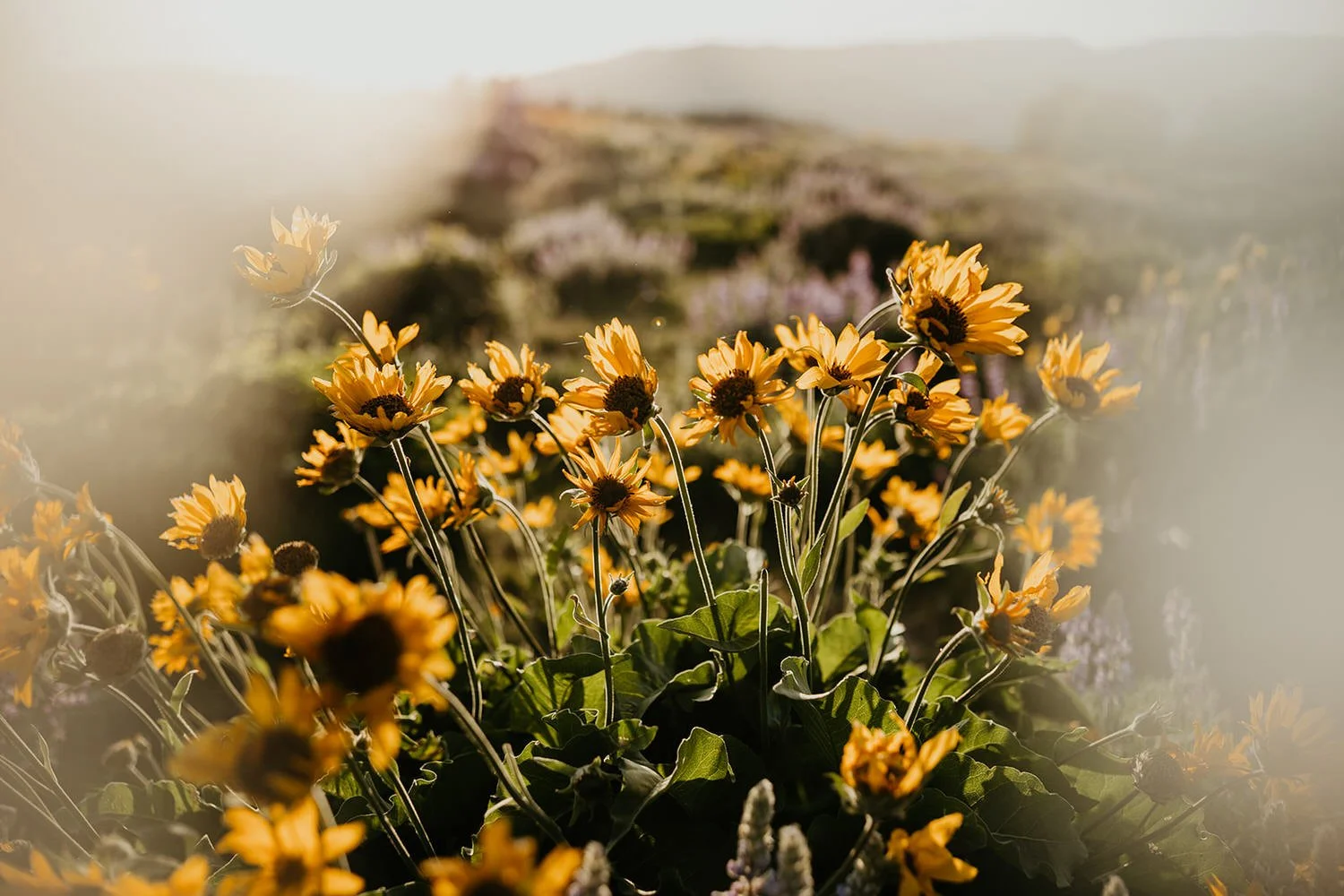
Arrowleaf Balsam Root
High Elevation: July through August
Mountain heather, fireweed, paintbrush, arnica, lupines, phlox, and so many more.
These bloom at 5,000 feet and higher in dense, vivid meadows all over the Cascades, Mount Rainier, and the Olympics. If you’re picturing mountains and wildflowers in one image, you’re going to have to get higher in elevation! We’ll get into where to find these blooms below.
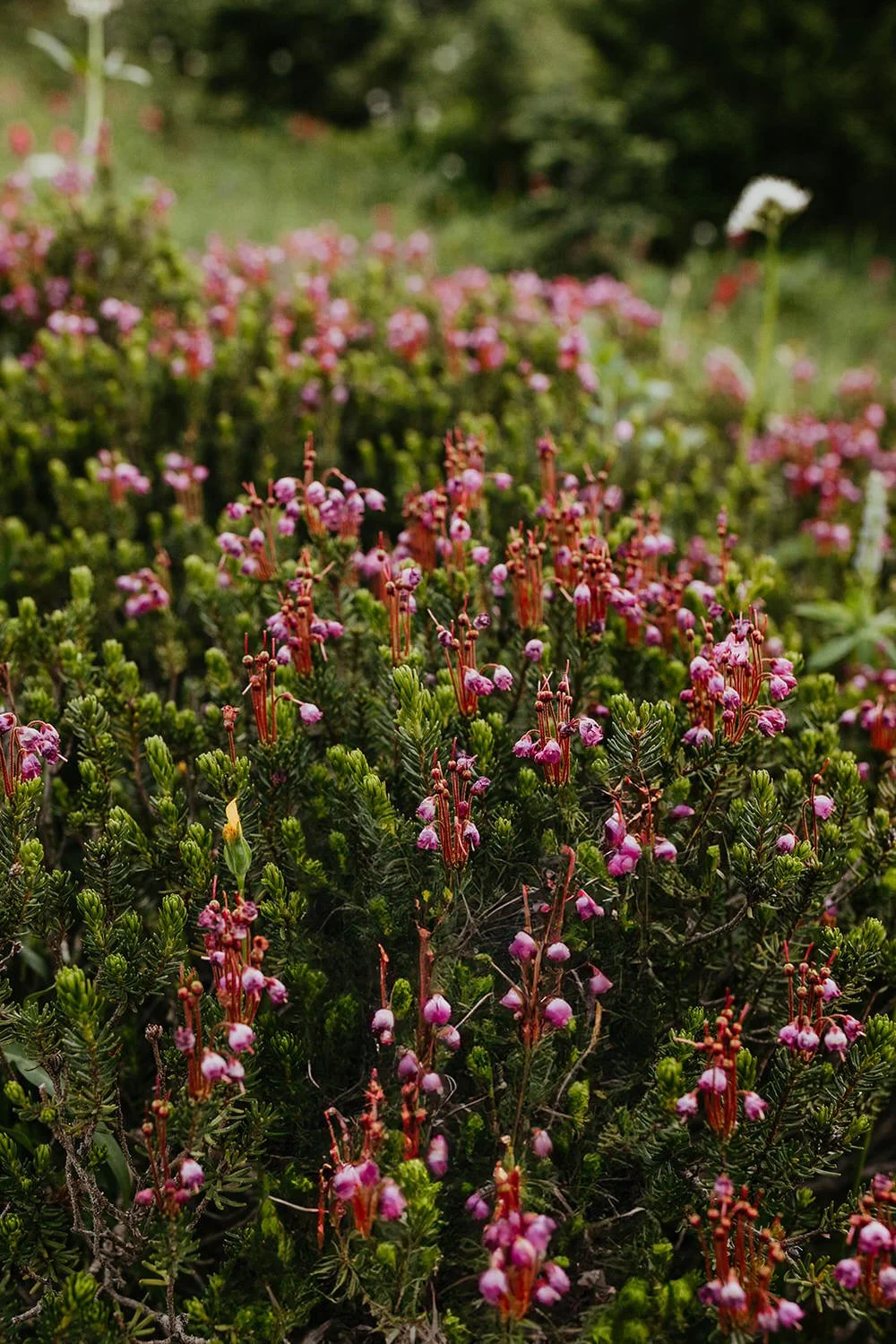
Pink Mountain Heather
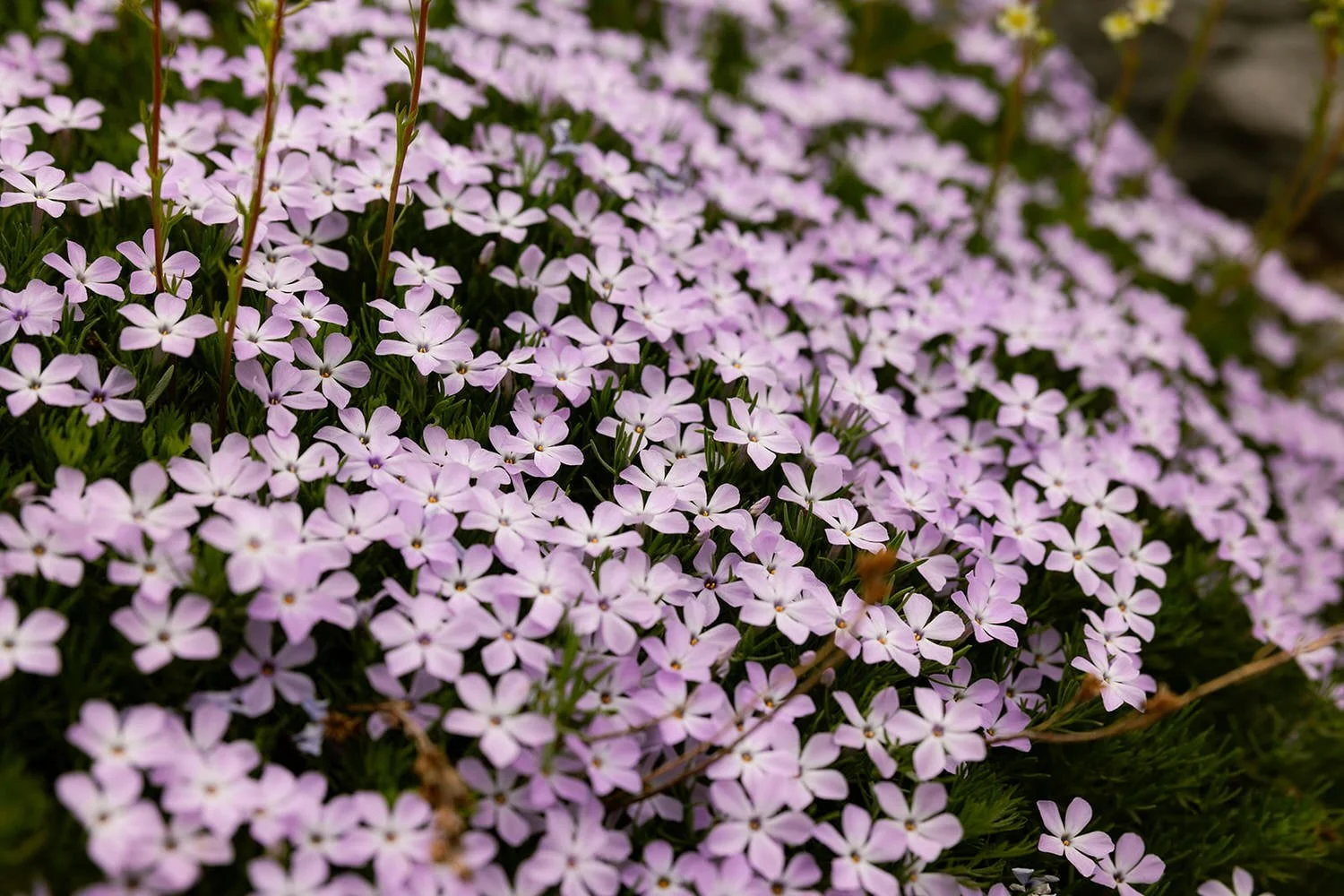
Spreading Phlox
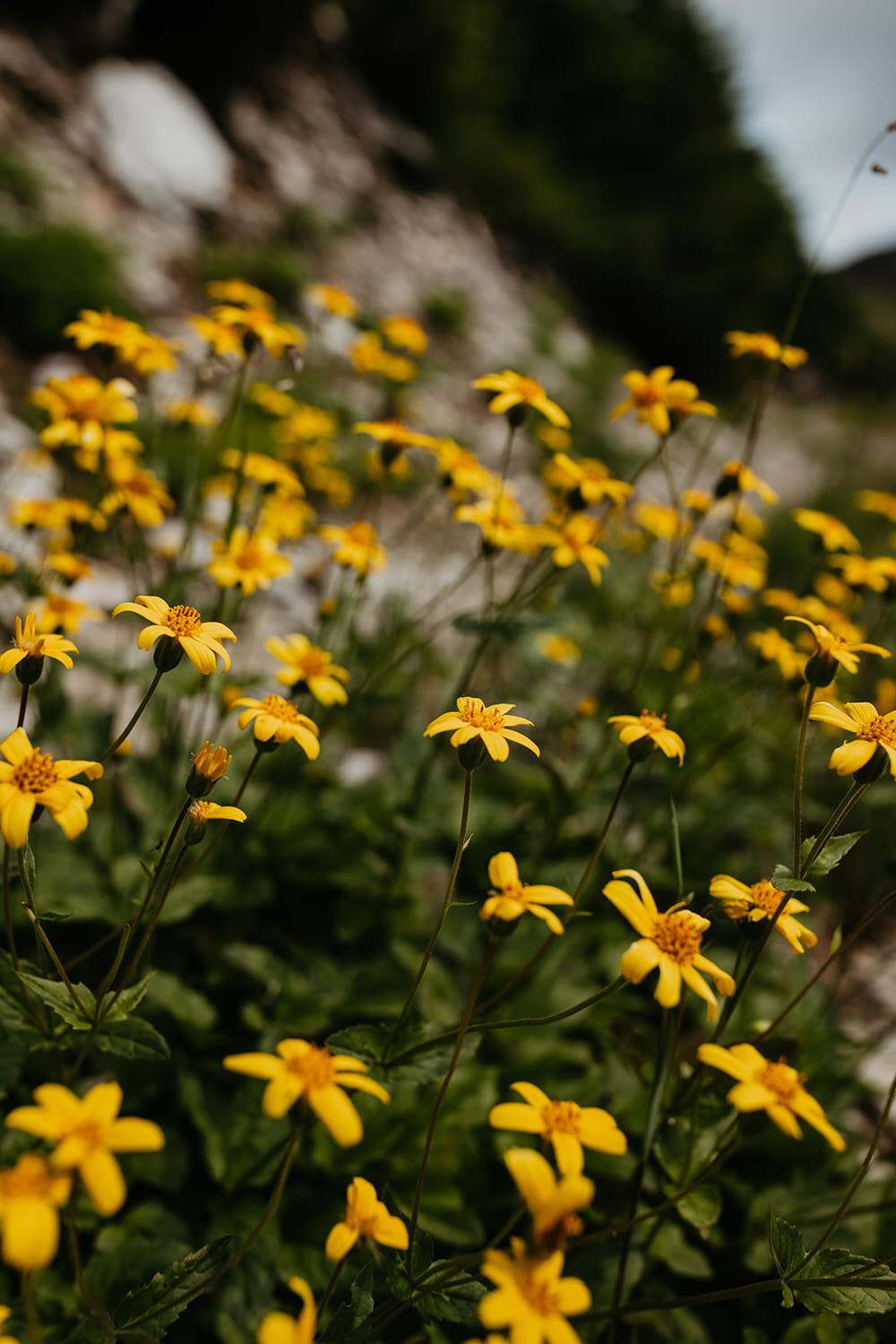
Broadleaf Arnica
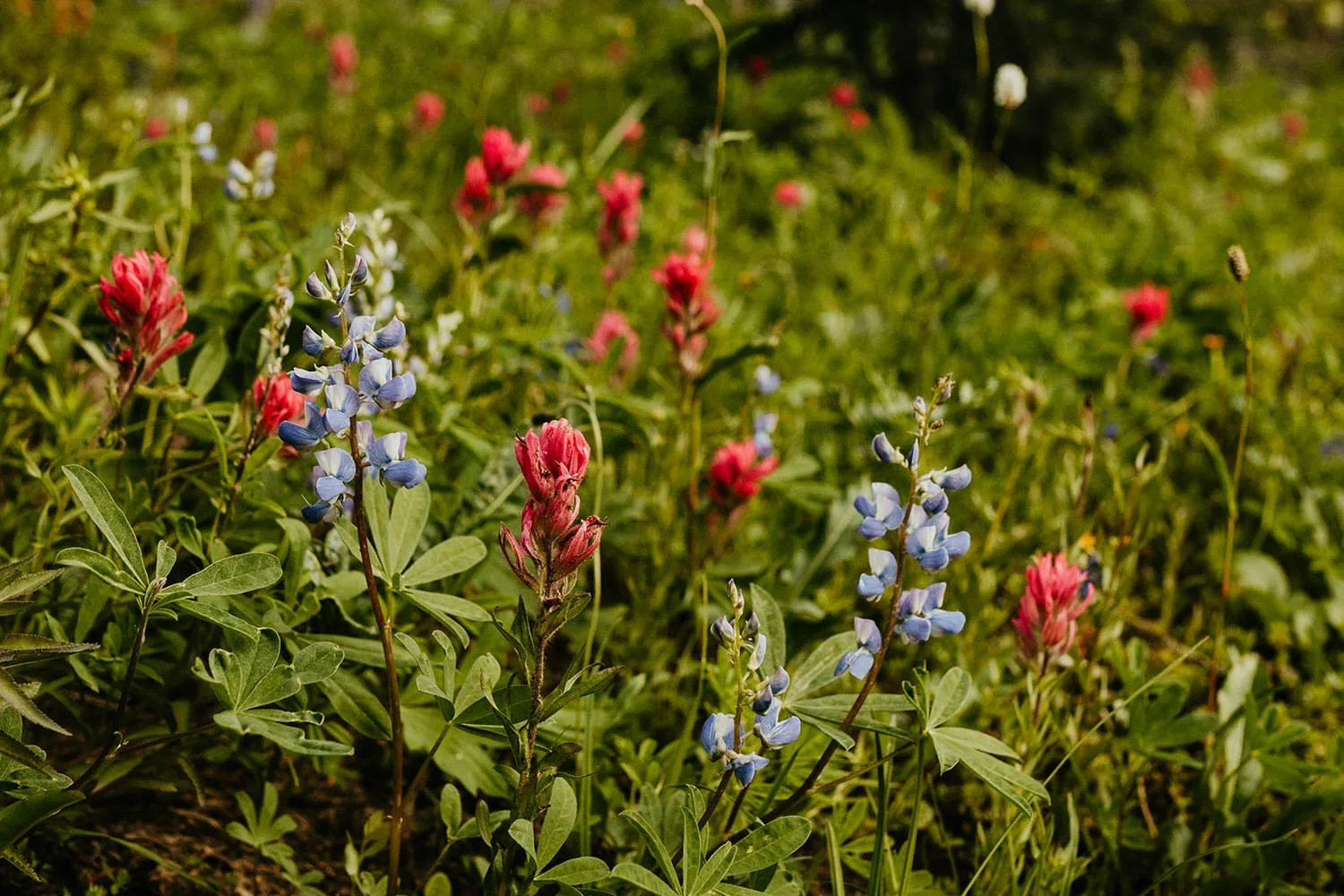
Orange Paintbrush and Lupines
The Migration
As elevation climbs, bloom times shift forward. Late March is Seattle. April is the Columbia River Gorge and Leavenworth. May opens mid-elevation zones like Eastern Washington. June is when Olympic National Park’s flowers pop off. Mid-July is peak alpine. August is even more alpine, but they’ll be starting to die off. Wildflowers are continuously blooming somewhere, you just have to know where to look for them for your elopement!
Why Wildflowers Matter for Your Elopement (and What Most Couples Don’t Know)
Wildflowers aren’t just pretty (okay they’re 90% about how pretty they are 🤪). They fundamentally change how a landscape shows up in elopement photos! They can add depth, frame the couple, and offer gorgeous pops of color. But getting them right means understanding these three things:

The Timing Problem
Pick the wrong month for a specific elevation and you’re chasing flowers that haven’t emerged yet or are on their last leg, looking mostly dead. This is why so many couples end up disappointed - they booked their elopement date based on how flowers bloom near their house or in different parts of the country, not how Washington specifically blooms. Once you understand that wildflowers don’t show up in high elevation places like Rainier in April and May like they do in the Columbia River Gorge, you stop guessing and can start planning.
The Ethics Reality
High elevation meadows are so, so fragile. Off-trail footsteps add up across seasons. But we definitely don’t have to damage anything to get the photos you’re dreaming of! It’s all about positioning, angles, finding where natural clearings already exist. I’m not walking couples into pristine meadows (literally ever), I’m using technique to make a random patch of 8 flowers look like a whole sea of them.
The Photography Advantage
Flowers create warm, soft light in ways nothing else does. They create visual layers in photos that are unmatched! Standing in front of a mountain peak vs standing among wildflowers in front of a mountain are wildly different. The right flowers at the right elevation positioned carefully can transform the whole image.
March & April: Spring Wildflower Elopements
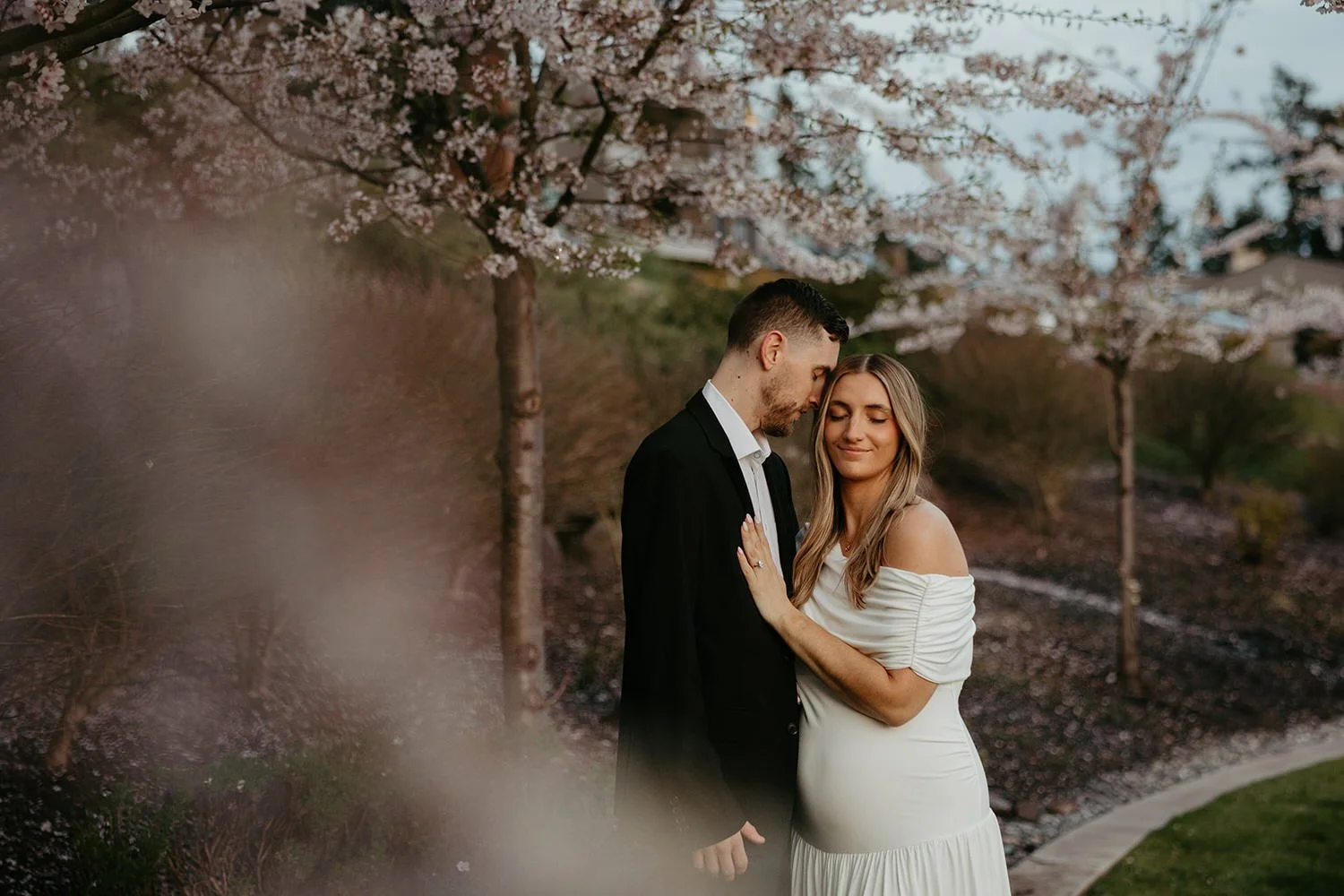
This is the accessible window. No snow, no serious elevation gain required. Trails dry enough for normal elopement attire! If you want wildflowers but aren’t ready to commit to alpine logistics or wait until July or August, March and April are your answer.
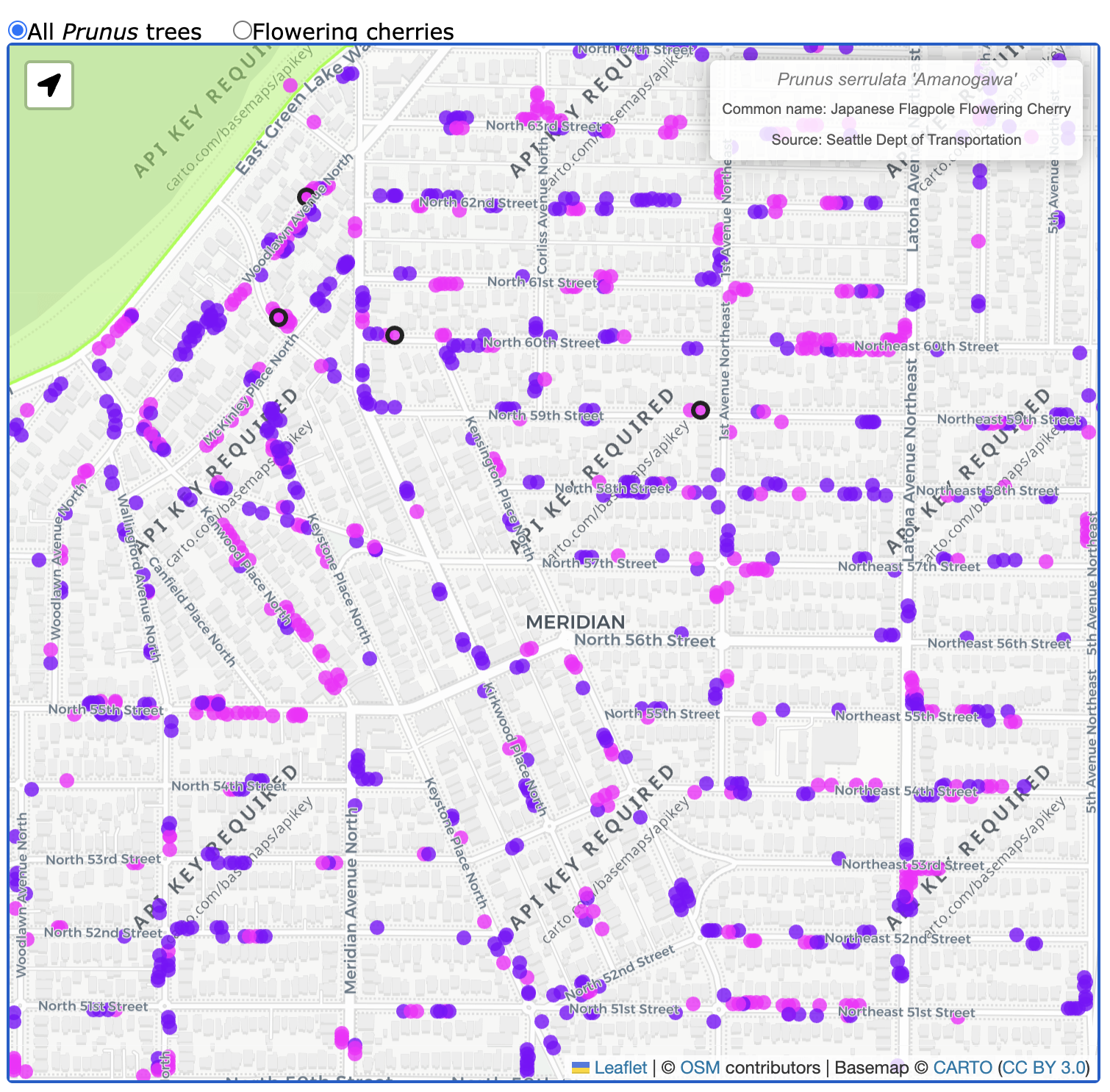
Cherry blossoms hit Seattle mid-March through early April. Places like the UW campus, Seward Park, the Washington Park Arboretum, Green Lake, and Meydenbauer Bay Park in Bellevue are typically covered in them. There’s actually a frequently-updated cherry blossom map of the greater Seattle area that I love. For elopements, cherry blossoms might just be another stop on your elopement day rather than where you have your ceremony - these places can be super busy for the short season and finding solitude is tricky!
By April, arrowleaf balsam root takes over the Columbia River Gorge. These are the big, cheerful yellow flowers covering open, dry slopes. You’ll also see flowers like tiger lilies, paintbrushes, and potentially even some rhododendrons. The western part of the Gorge especially (in the second half of April) is prime! You’re also seeing plenty of wildflower action in Leavenworth, Wenatchee, Yakima, and all around Chelan.
Why March and April might be for you: Spring elopements mean more manageable logistics overall. Snow is gone from these elevations, you’ll be in warm temperatures, and you can reach wildflowers the second you step out of the car OR take a longer hike to find mid-elevation flowers!
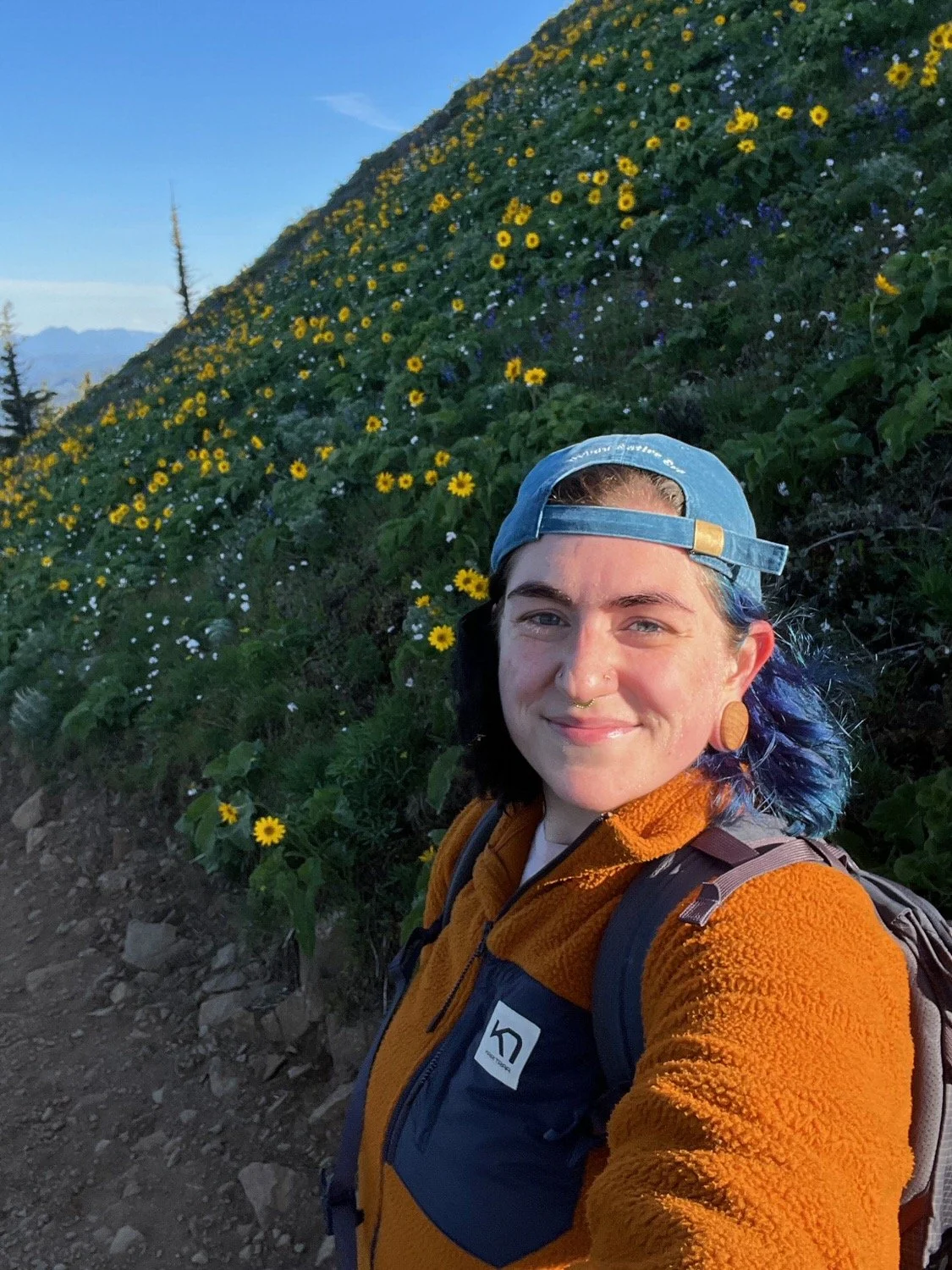
Please enjoy this photo of me on Dog Mountain in the Columbia River Gorge (I look calm but I was crying the second this hill came into view)
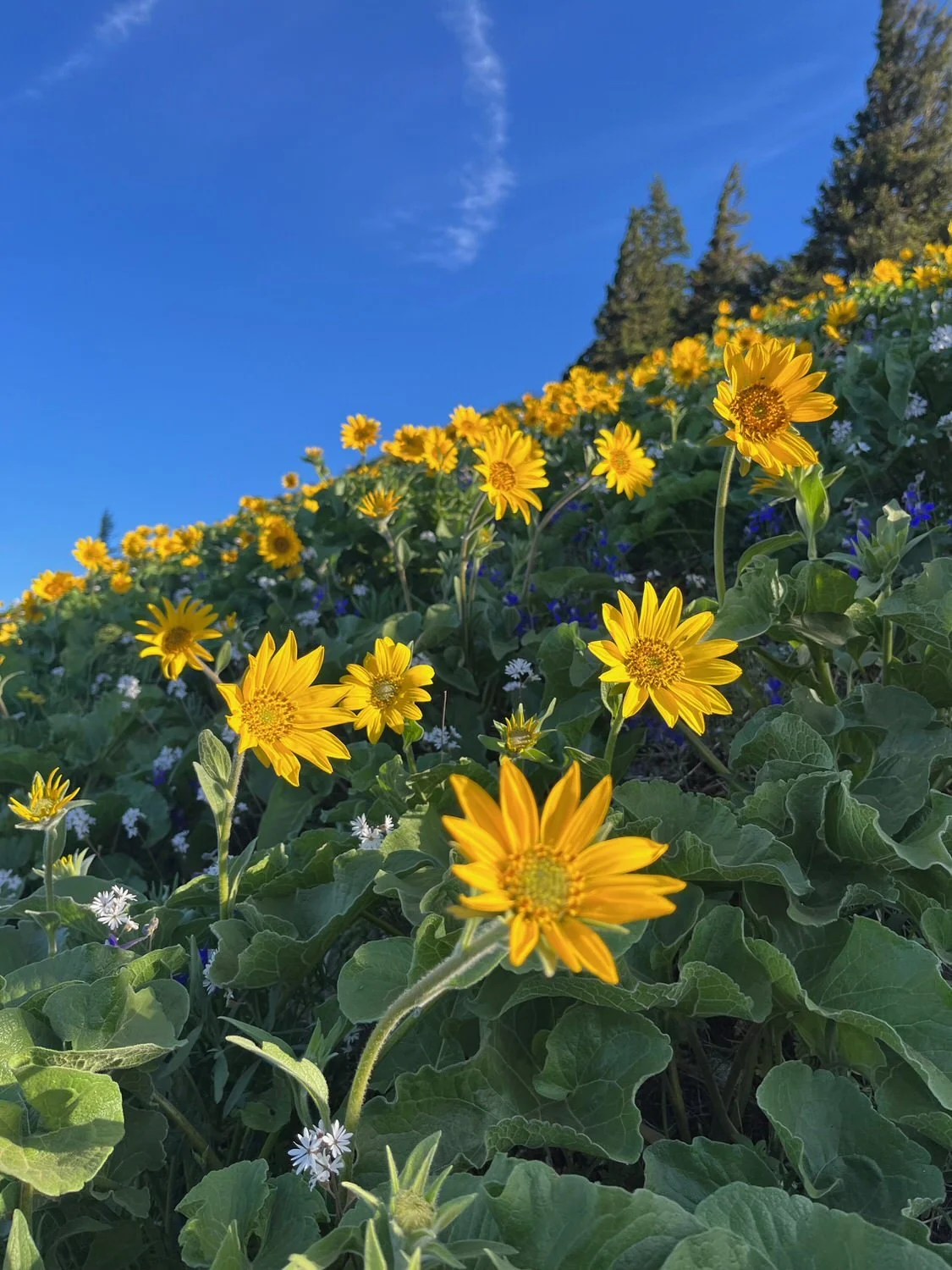
Watching thousands and thousands of these lil guys stretch towards the sun that was coming up was unforgettable 🥹
May: Mid-Spring to Early Summer Transition

May is when wildflower season really starts shifting. Lower-elevation spring flowers are still going, but you’re also starting to see mid-elevation flowers wake up! We’re talking lupines at Discovery Park, daisies popping up at Lake Crescent in Olympic NP, and just on the other side of the Cascades are massive blooms around Chelan. Early May in Leavenworth and Wenatchee still have strong spring bloom energy (trust me).
Mid-May, we’re focusing on Olympic National Park’s lower elevation areas like Mount Storm King and fireweed all along roads near the Washington Coast.
There’s also a bonsai festival that takes place in Federal Way, WA each May that will absolutely blow your mind if you have extra time before or after your elopement!
Why May might be for you: May is the bridge month. You’ve got options! Want accessible spring flowers? They’re still happening at lower elevations. Want to start venturing into the alpine? Early ONP hikes are becoming viable. You’re not locked into one area or elevation!
June: High Elevation Transitions

By June, the meadows are fully waking up at mid-elevation. Daisies at Lake Crescent are everywhere, more lupines in and around Seattle, and even the Mountain Loop Highway has plenty blossoming!
Mid-June is when Olympic National Park’s high country really opens up. Places like Hurricane Ridge, Obstruction Point, Marmot Pass, and Mount Townsend are a little ahead of schedule when it comes to snowmelt compared to the Cascades. Trails are becoming passable (snow patches may still exist) and subalpine flowers are emerging.
Why June might be for you: You’re getting more options all around! You’re not having to choose between lowland fading out or alpine just starting to glow. Weather is a little bit more stable, higher elevation hikes are becoming feasible without specialized snow gear, and mountain travel is opening up.
July: Peak Alpine Season
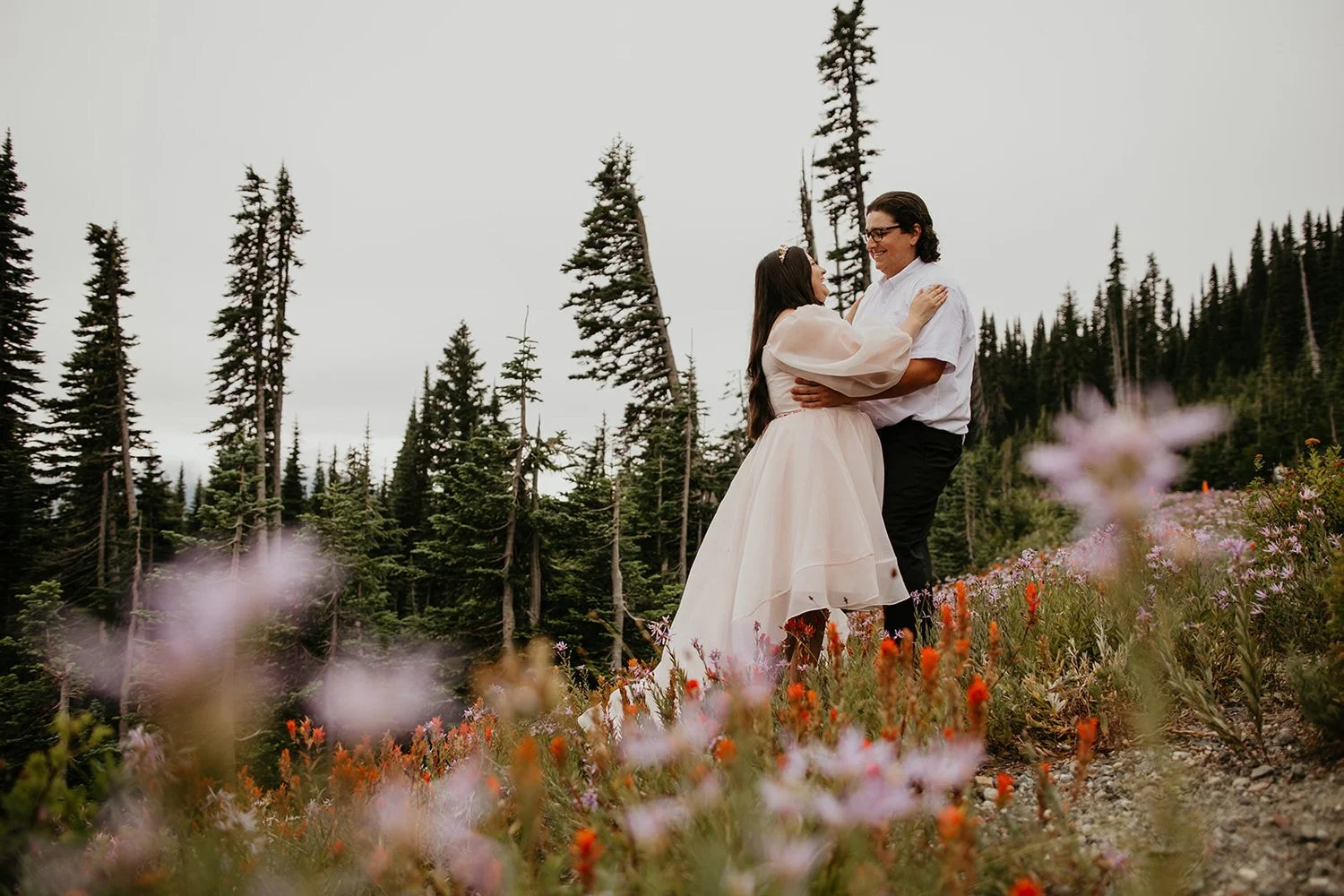
THIS is the season most people are picturing when they think of Washington wildflowers.
July is when high-elevation wildflowers absolutely pop off!! Mount Rainier is hitting her stride, the North Cascades are in full bloom, and Mount Baker is literally stunning. Hart’s Pass, fire lookouts like Kelley Butte and Thorp Mountain Lookout, and Johnston Ridge at Mount St. Helens are all in peak bloom.
Early July hits paintbrush and lupine, mid-July is when Fireweed at Artist Point really starts showing off, and late July is when basically every mountain meadow in the North Cascades is covered in pink mountain heather. Everywhere from Winchester Mountain to the Enchantments to Olympic National Park are hitting peak bloom.
There’s also lavender blooming in places like Sequim if you want something unique and distinctive - not wildflowers in the traditional sense, but still beautiful flowers nonetheless!
Why July might be for you: This is really the main event. Mountain wildflowers are at their most abundant and most dramatic. The days are long and the weather is more stable than fall, winter, and spring. This is when “wildflower elopement” becomes a reality in the ways couples usually imagine it!
Late July & August: Extended Alpine Window
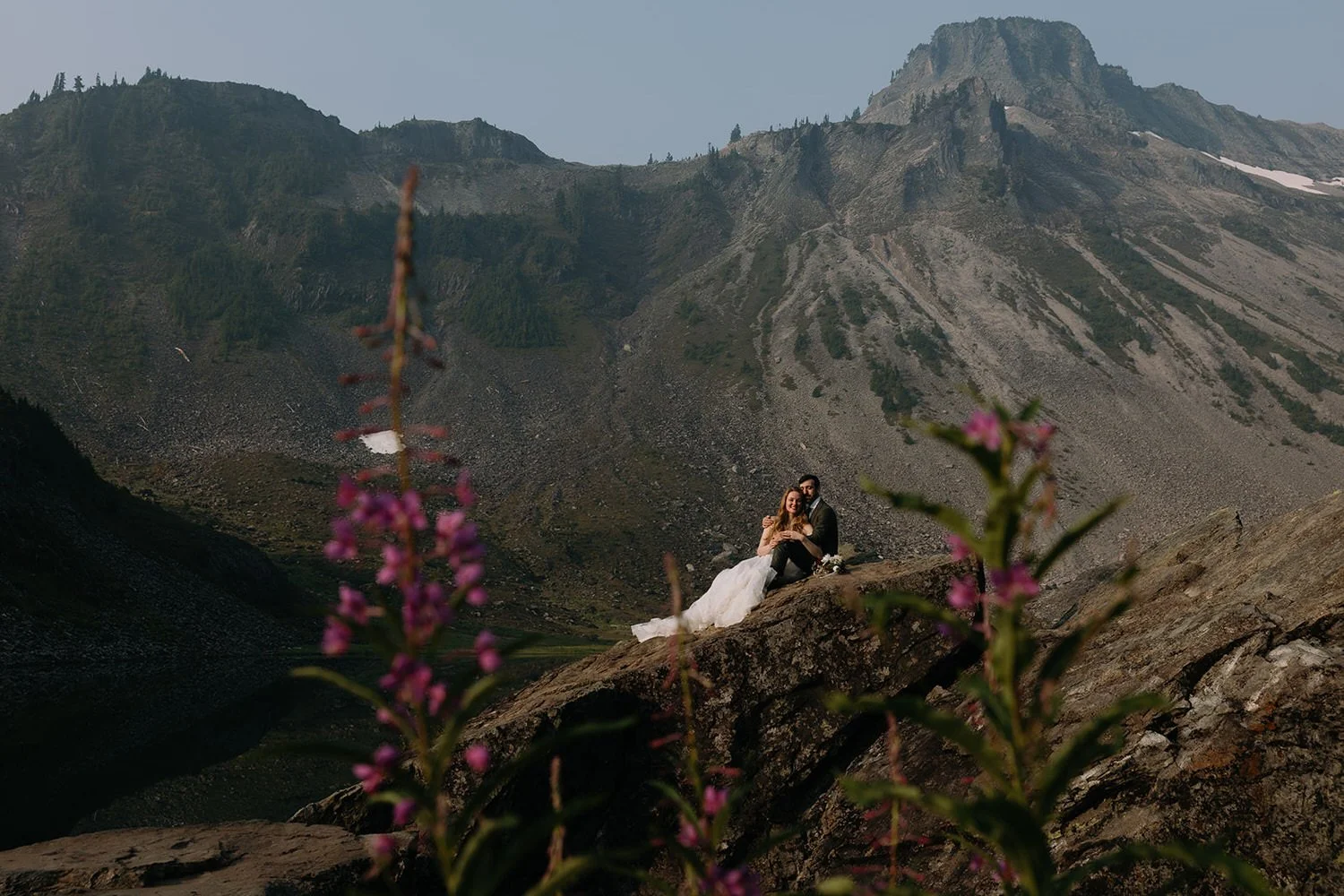
August extends the season even further. Early to mid August at all of the places I mentioned in July are still going strong, though some are starting to disappear away by mid-August. Late August is the tail end of the wildflowers in Washington, but they’re not all gone.
Why late July and August might be for you: If you’re set on an August elopement due to scheduling conflicts, loving the warm temperatures, or wanting to go into the high alpine with the snow is melted, you’re still going to see flowers, I promise. Keep in mind that the weather can be more unpredictable and temps are chilly at night, but you’re also getting longer shadows and warmer light in your photos.
Bring Your Dog to Your Wildflower Elopement
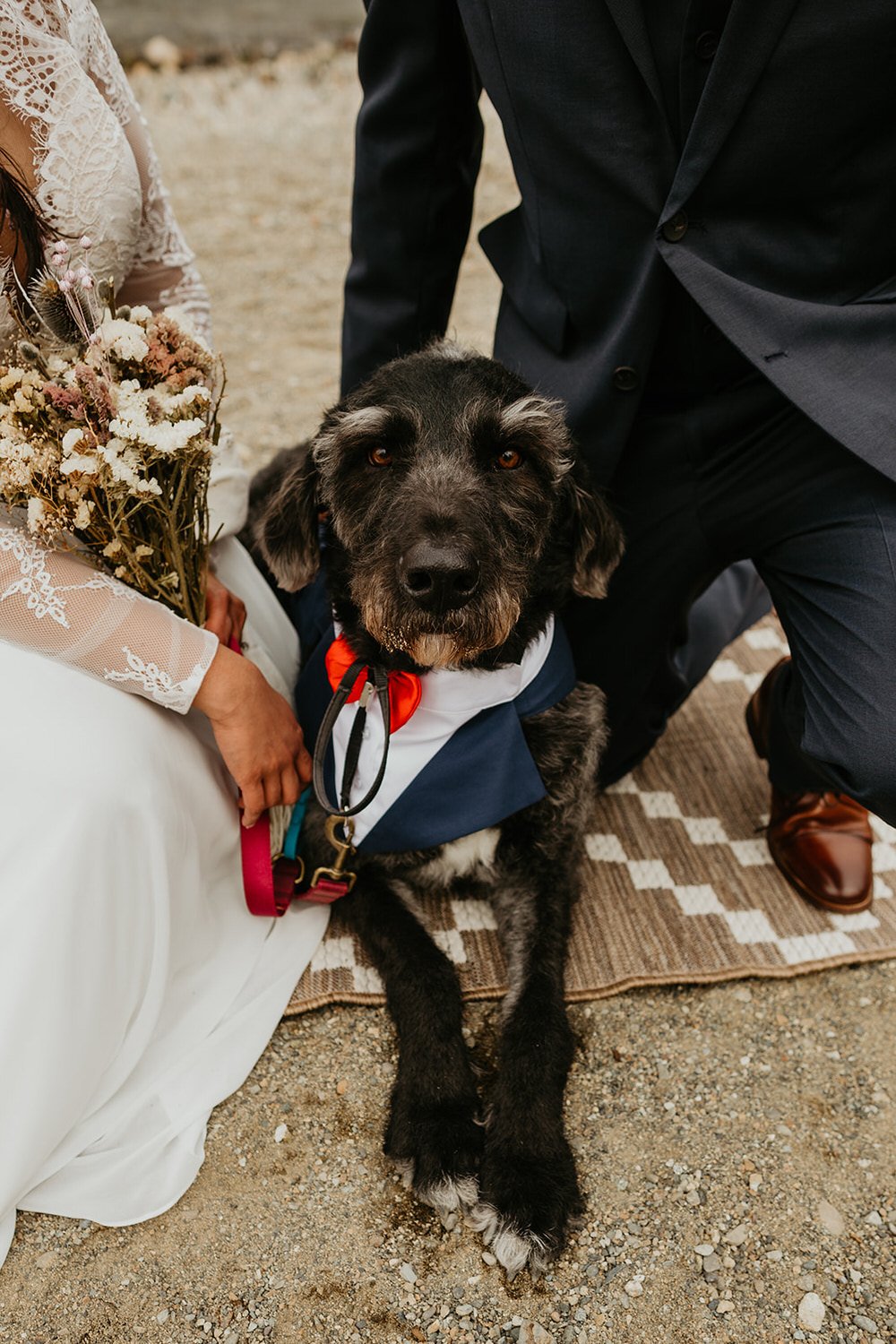
Dogs and wildflowers can absolutely coexist! While you should never let your dog run through wildflower meadows off-leash (they can harm the flowers, too), most Washington wildflower locations are dog-friendly - trails, meadows, alpine zones. Bring your pup along for the adventure!
The only major exceptions: Mount Rainier National Park restricts dogs from all trails in the park aside from campgrounds and paved parking lots. Olympic National Park has a few trails like Mount Storm King and Moments in Time that don’t allow dogs. North Cascades National Park doesn’t allow dogs in the backcountry, but otherwise they’re welcome most places.
Your dog standing in front of some wildflowers is gonna make for the cutest photo of all time 🥹
Accessible Wildflower Elopement Locations

Wildflowers aren’t just for hikers who want to get miles away from the parking lot (nor should they be). The outdoors are for everyone! These wildflower locations are accessible with varying mobility levels:
Fully accessible (some paved or smooth paths):
Seattle Parks: UW campus, Seward Park, Washington Park Arboretum, a few trails at Discovery Park
North Cascades: Washington Pass Overlook and Artist Point - Many paved trails from parking lots to overlooks including Heather Meadows and Picture Lake
Mount Rainier: Many paved trails starting at Paradise including Glacier Vista, Deadhorse Creek, Alta Vista, Myrtle Falls, and part of the Skyline trail, Nisqually river bridge, Ricksecker Point,
Olympic NP: Lake Crescent, Hurricane Ridge area including Cirque Rim and Big Meadow nature trails
To read more about accessible hikes and elopement locations, read my blog here→
Leave No Trace: How to Elope Responsibly
Wildflower meadows are ridiculously fragile. Soil at high elevations is thin, and plants are up against short growing seasons and harsh conditions (but they always prevail!). A couple walking hand in hand through what feels like an ‘untouched meadow’ is actually creating damage that takes years or even decades to repair. No I’m not kidding, and no I’m not exaggerating here. A general principle I use for deciding if somewhere is off-trail or if it’s safe to walk, because not everything is black and white in the outdoors: if 100 other people showed up today and walked in my same footsteps, would this area be hit hard? If yes, avoid it and move on to another spot. It’s all a part of Leaving No Trace when we recreate outdoors.
But here’s what matters: You don’t even have to venture off trail to get the wildflower photos you’re looking for!! The best shots happen at trail edges, in natural clearings, and at angles only an experienced photographer would know to look for (catch me constantly gawking at trail intersections for this exact reason).
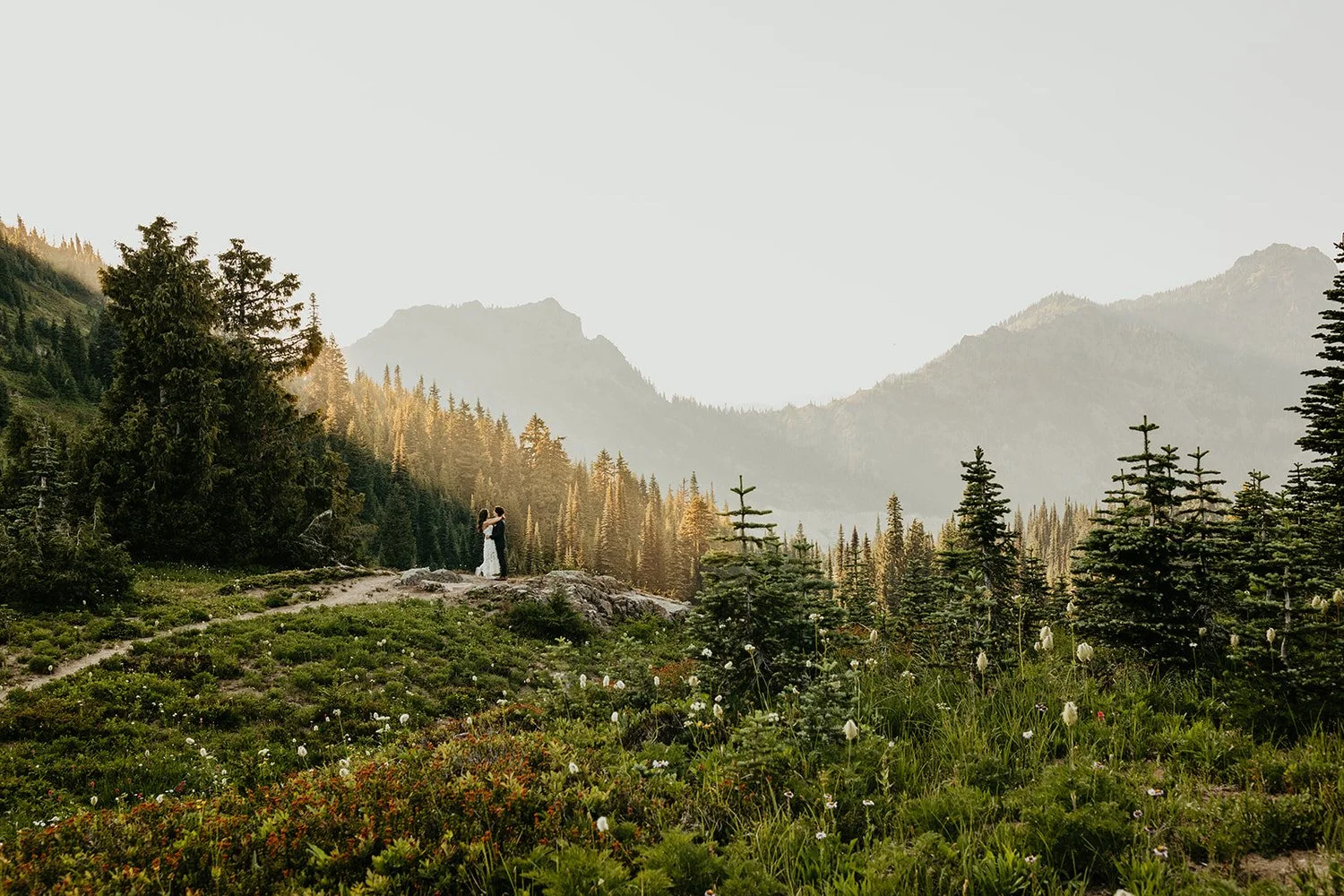
Hint: The couple is standing on a trail, and so am I!
Why Off Trail Damage Matters
Alpine vegetation grows slowly. A single footstep crushes plants and compacts soil. Multiple footsteps across a season create new visible trails (called social trails) and causes erosion. Multiple that across hundreds of thousands of people wanting to take an iPhone photo in the same spot and you’re looking at permanent landscape damage. The goal is to get photos you dream about without adding to that problem!
How to Identify Trails vs. Sensitive Alpine Vegetation
Trails are obvious in most places - they’re worn, they’re clear, they’re the path. Sensitive alpine vegetation looks delicate and low-growing: tiny cushion plants, fragile flowers, moss. If it looksl ike it might break under your foot, it probably will. If you’re unsure, just ask! I know these zones well and know what to look out for.
Tools to Track Wildflower Seasons (and How to Use Them)
If you’re new to me or my site, you should know that I LOVE DATA. Spreadsheets and historical data and organizing information to be the most beneficial is my jam (some friends have said it’s my ADHD superpower ☠️). I have an entire Google Calendar of every wildflower area I know of and when it will be in season so I can easily scroll through to future elopement dates and confidently say what’s going to be blooming. And it’s constantly growing!
In addition to that calendar, tools like the ones below are my absolute favorite for collecting data, both from years ago but also recent days! Here are my go-to tools for Washington wildflowers:
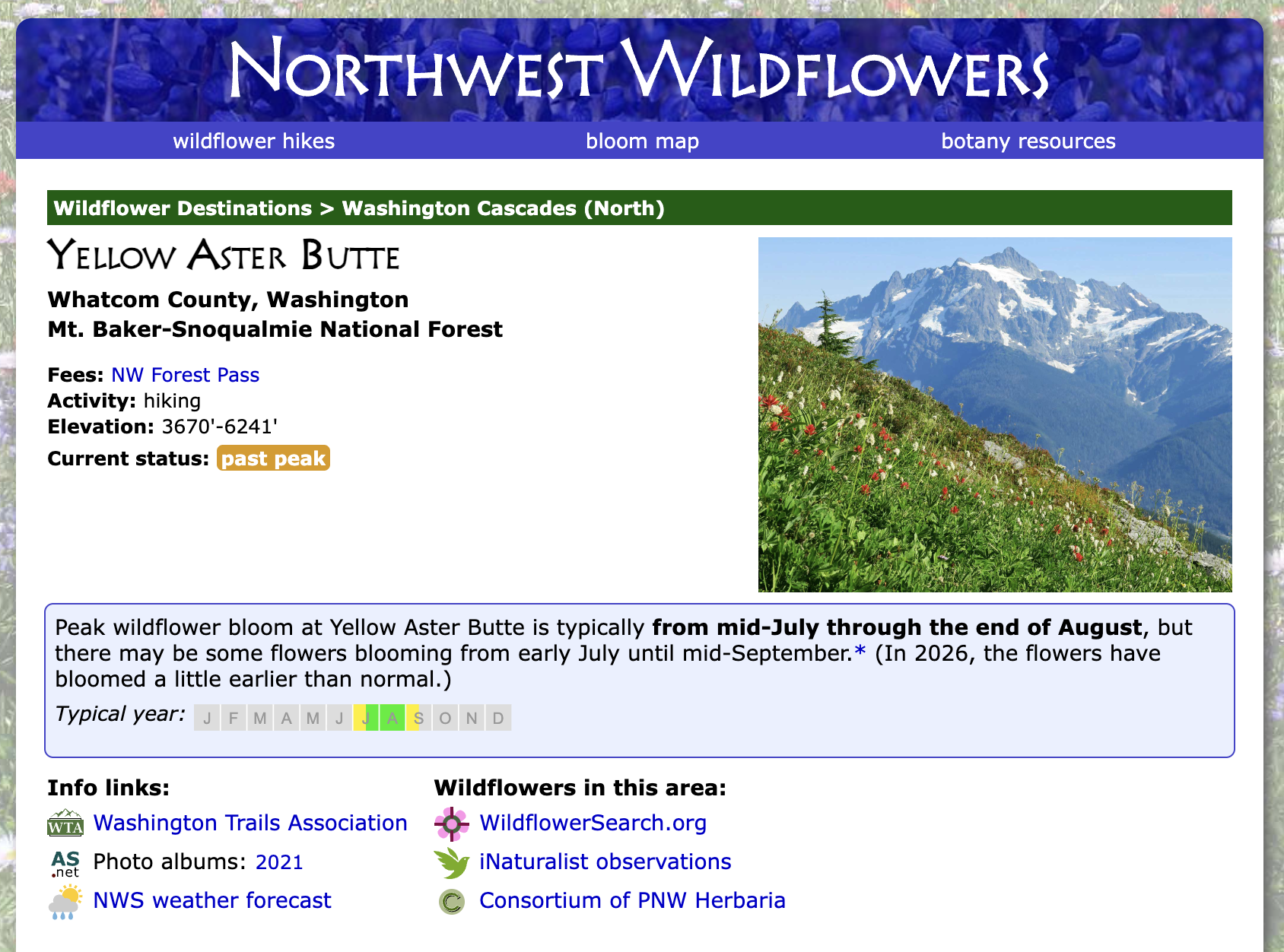
NW Wildflowers Map
This is the main tool to track wildflower blooms across the PNW. It’s an interactive map showing wildflower observations, tagged by location and bloom date. You can filter by flower type, search by region, and see real-time data from hikers and naturalists. It’s crowdsourced, so it’s only as good as the people reporting, but it gives you a realistic picture of what’s actually blooming on the ground right now. You can even choose a different month to see what will likely be blooming during that time.
➡️ https://nwwildflowers.com/map/
Go play around with it and see what you can come up with!
Seattle Cherry Blossom Tracking Map
If you’re planning a March or early April elopement near Seattle, this map is going to be your best friend. 17,000+ individual cherry blossom trees (yes, tree by tree!) are mapped out, and you can even filter by what’s blooming currently. Mind-blowing.
➡️ https://nathenry.com/writing/2023-03-28-seattle-cherry-blossoms.html
Bonus: Washington Wildflower Search (wildflowersearch.org)
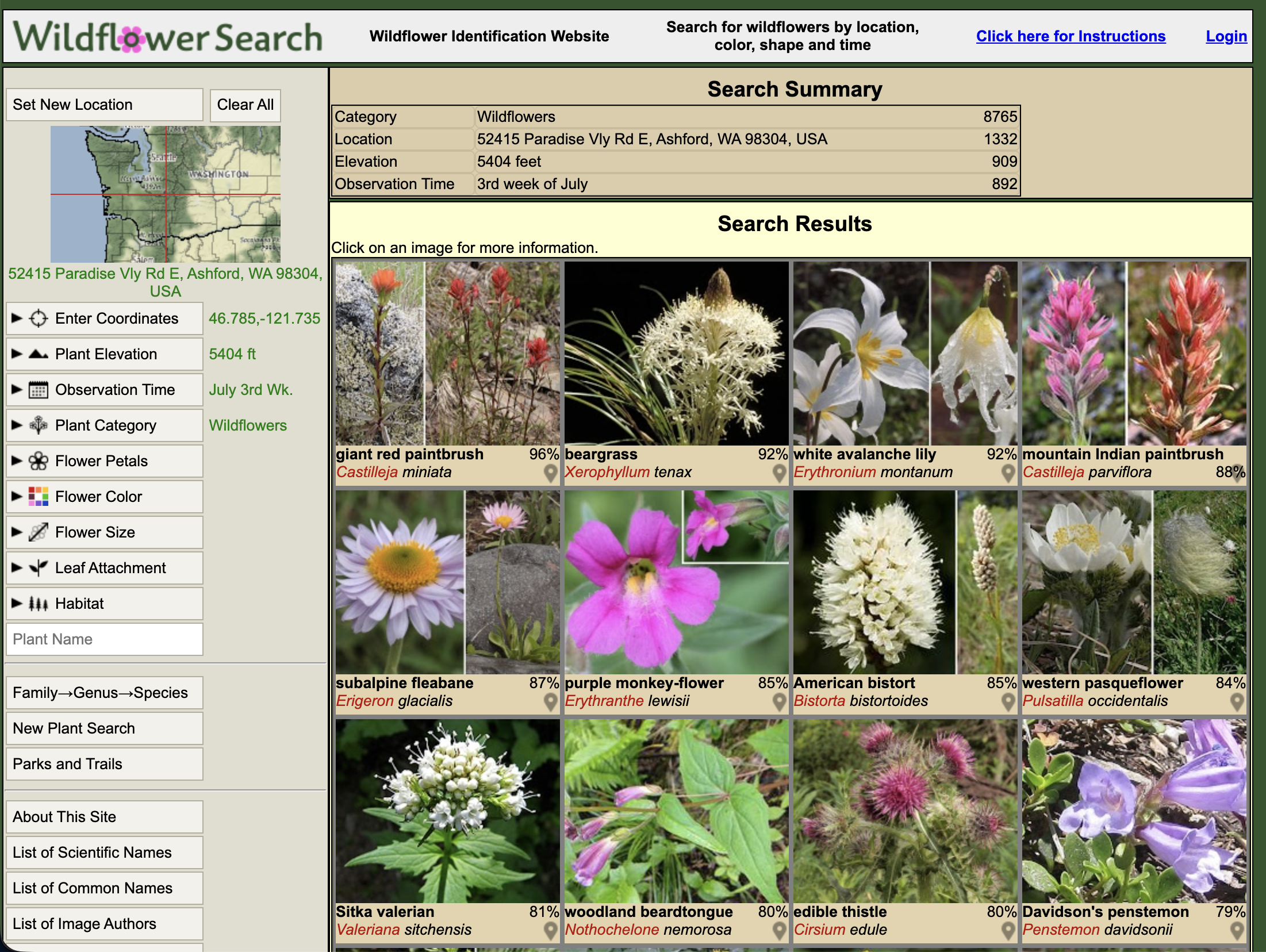
I cannot speak highly enough of this site and its accompanying app. You can search where flowers will be blooming at what time of year, look through specific locations to see what wildflowers grow there, and learn a little bit about the flowers themselves.
But my favorite thing to do after a trip where I took a zillion photos of wildflowers is to go to wildflowersearch.org and identify the plants myself! You can enter the region and date where you took the photo, filter by features such as number of petals or what color it is, and it’ll give you a list of results to narrow down which flower it could be! Truly such a fun little thing to do with your photos instead of keeping them in your camera roll and never looking at them again.

FAQ: Wildflower Elopement Planning
What month has the best wildflowers for elopements in Washington?
It depends on what you want! March and April have cherry blossom and low elevation flowers, May has options both at low and high elevations, and June through August is peak alpine wildflower season. There’s no single “best” month, there’s the best month for specific flowers and locations!
Can I walk through wildflowers for photos without damaging them?
No, and please don’t!! Meadows, especially ones at higher elevations, are incredibly fragile. There are tons of ways your photographer can get angles that look like you’re standing amongst the flowers without damaging anything.
How do I know when wildflowers will peak at a specific location?
Use NW Wildflowers or Washington Wildflower Search to see historical bloom data for that location.
What’s the difference between wildflower seasons at different elevations?
Lower elevations bloom earlier in the year, typically what you think of as Spring months (March through April) and high elevations and alpine areas bloom in July and August. They both have relatively short windows, but they’re vastly different times of year.
Are there wildflowers available year-round in Washington?
No, but they’re pretty close. March through late August you can find something blooming somewhere. In September you’re chasing the tail end of high-elevation flowers. October through February is green and dormant. If wildflowers are non-negotiable for your elopement, book March through August!

What to Pack for Your Washington Wildflower Elopement
Wildflower elopements usually mean hiking in your wedding attire or planning to change into your wedding attire at the end of your hike. I have a comprehensive packing list that covers everything you could possibly need - from permits to champagne flutes to microspikes in the winter. Make a copy and check off items as you pack!
TL;DR - Real hiking shoes or boots, layers for warmth, water, snacks, and your elopement outfit with all its accessories.
Ready to Elope in Washington's Wildflowers?
Wildflowers in Washington aren’t a luxury, and they’re not hard to come by if you know where to look!
Pick your month, then your general elevation. Understand what’s blooming and where. And then book your photographer with the confidence that you’ll get exactly what you want - beautiful wildflowers around you on your elopement day and in your photos.
I’m a photographer and an officiant! I can handle the logistics, navigate the permits, position you in the wildflower meadow responsibly, and make it all happen in the background so you don’t have to stress over any of it. I know these elevations, I know when things bloom, and I know where you can stand without causing real damage to these flowers.
Let’s find your wildflowers and make this real!
Keep planning your elopement ⬇️
Best Dog-Friendly Elopement Locations in Washington
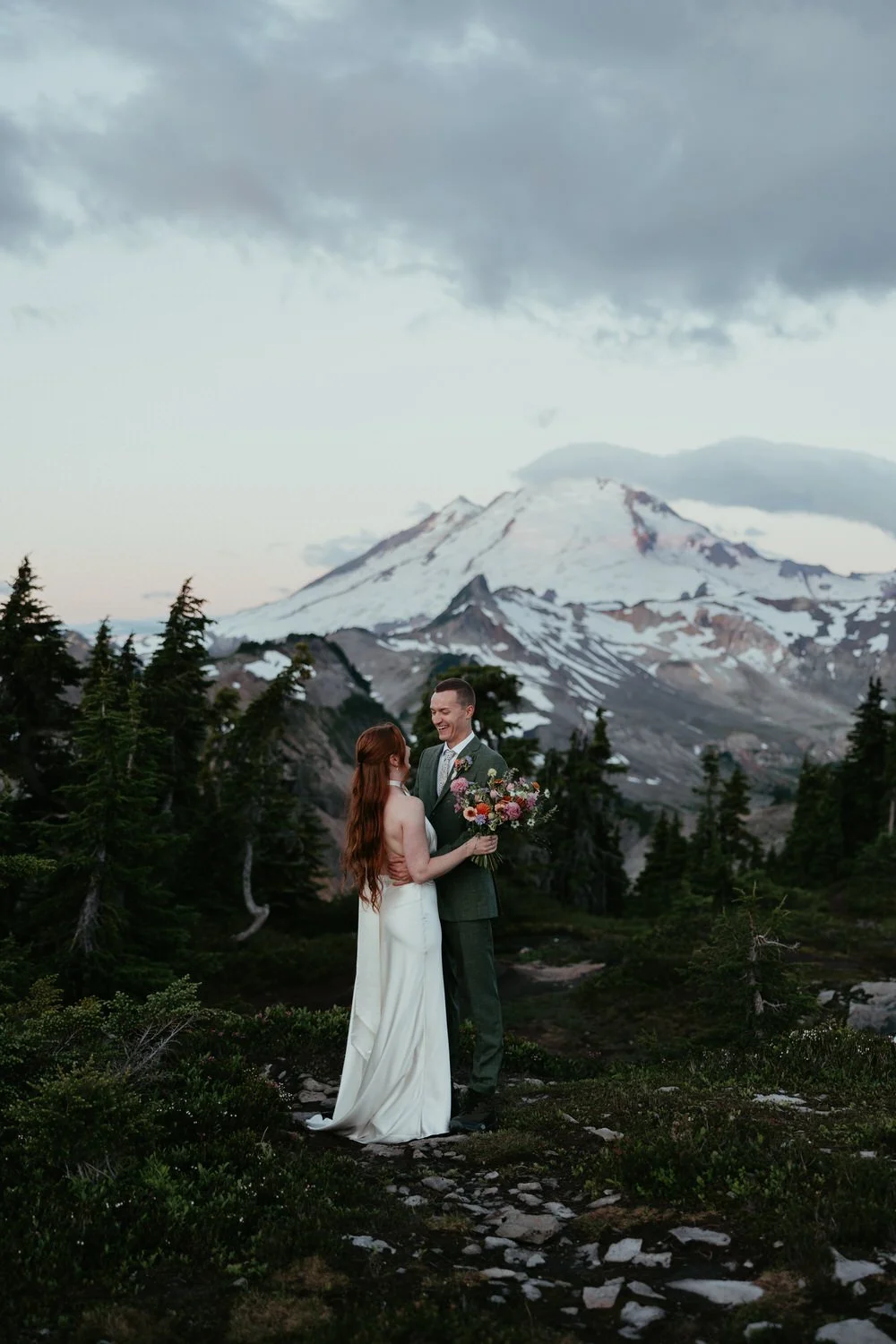
Your Guide to Eloping at Artist Point + Mt. Baker
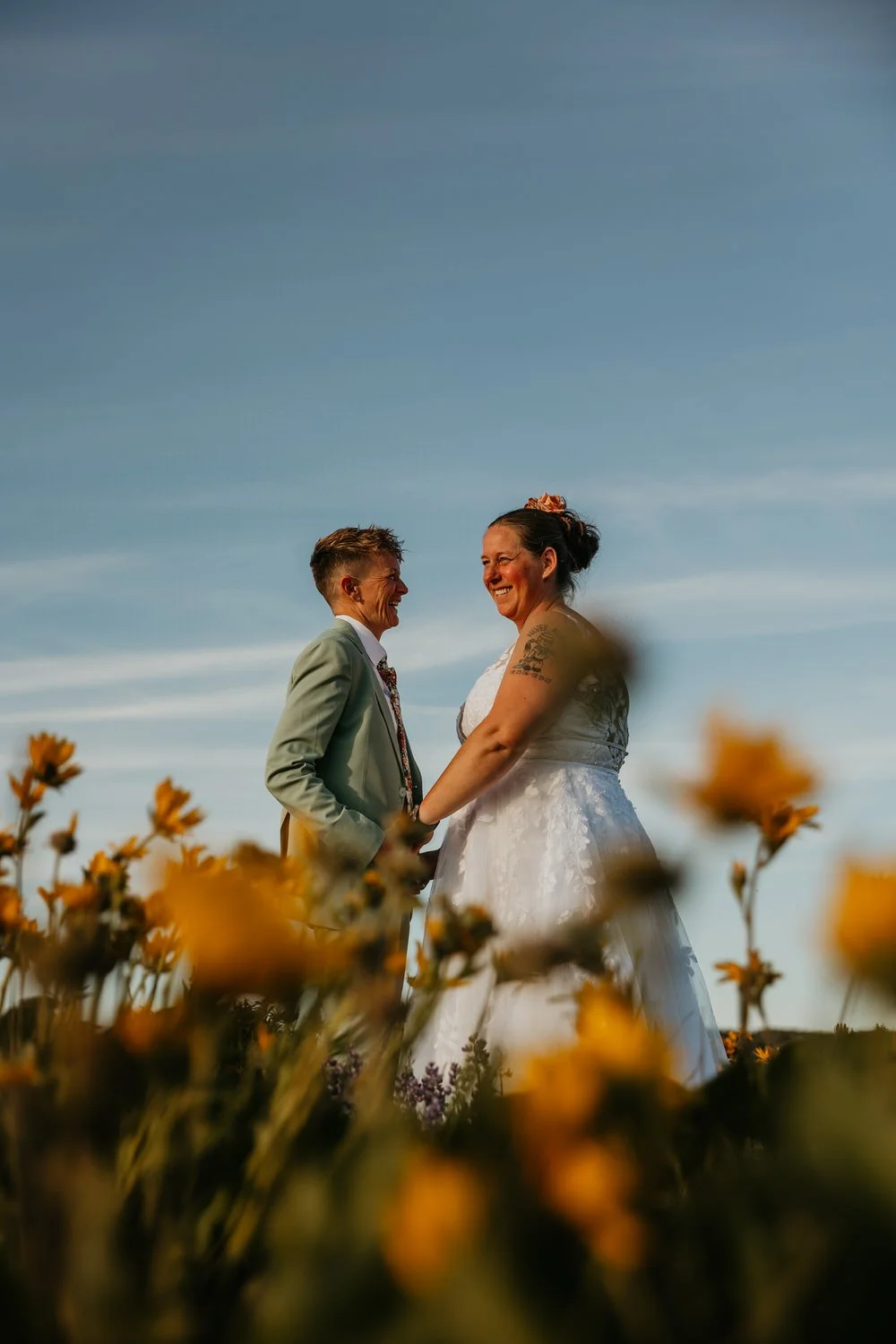
Elopement Activities That Aren’t Hiking
Van Gachnang is a Washington-based adventure elopement photographer who helps couples turn getting married outdoors into their greatest adventure yet.
