The Complete Guide for Your Mount Rainier National Park Elopement (2026 Update)
Originally published October 2024, last updated January 2026
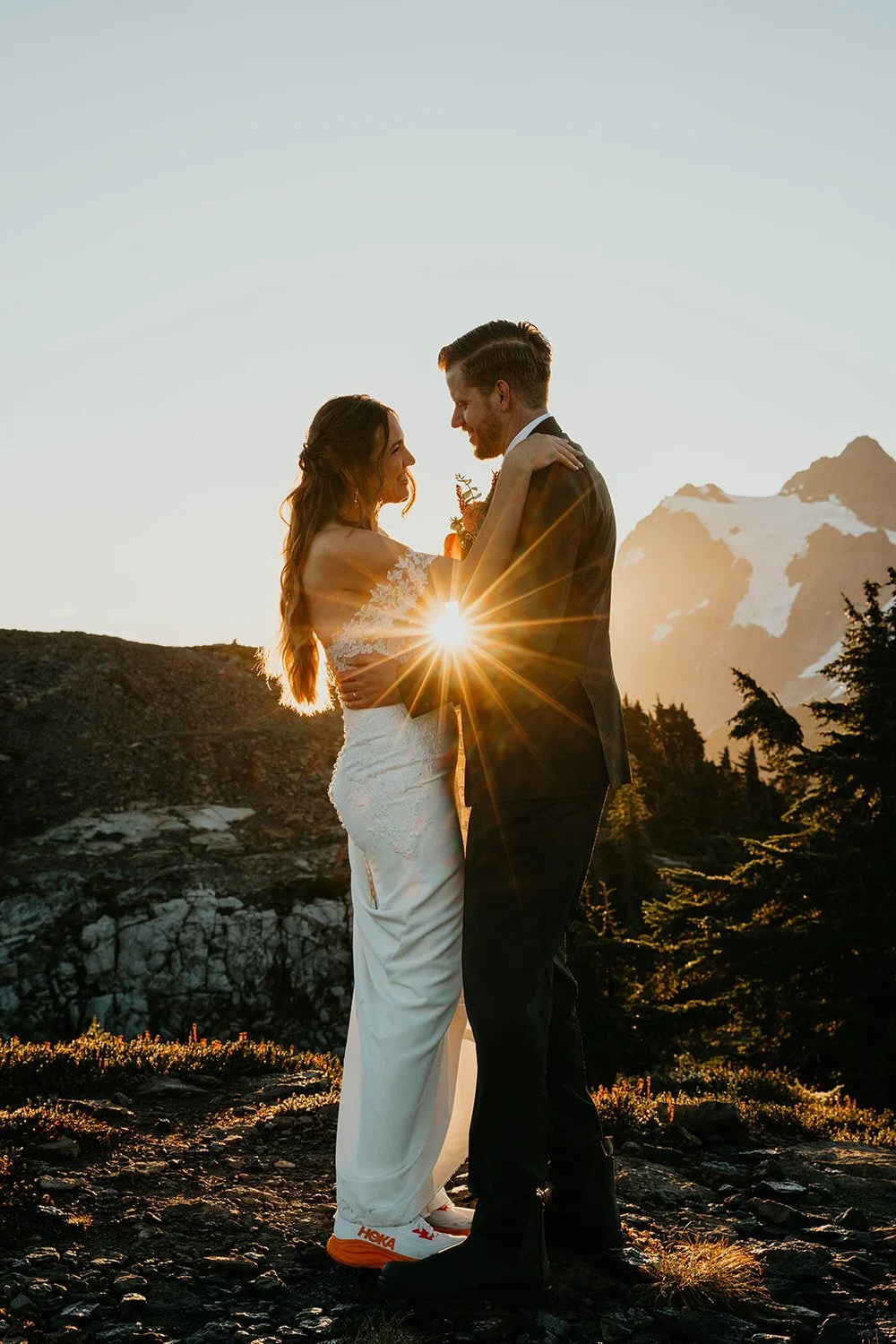
I’m a Washington-based Mount Rainier elopement photographer who knows exactly how to time wildflowers, dodge crowds, and chase that glowy alpine light without turning your day into a logistical circus.
Who This Guide Is For
This Mount Rainier guide is for couples who are drawn to iconic mountain scenery but still want their elopement day to feel calm, intentional, and genuinely theirs.
It’s for you if:
You’re dreaming of eloping at Mount Rainier and want to understand what that actually looks like in real life
You love big views but don’t love crowds, chaos, or guesswork
You want honest guidance around seasons, access, permits, and logistics
You’re excited about eloping, but also feeling a little overwhelmed by how much there is to consider
If you’re early in the planning process, amazing. If you already have a date or a rough vision, also amazing! This guide is designed to meet you where you’re at and help you make clear, grounded decisions as you go.
And if at any point you read this and think, “Okay… I want help with all of this,” there are easy next steps to reach out or explore working together when you’re ready.
Table of Contents:
The Reality of Eloping at Mount Rainier
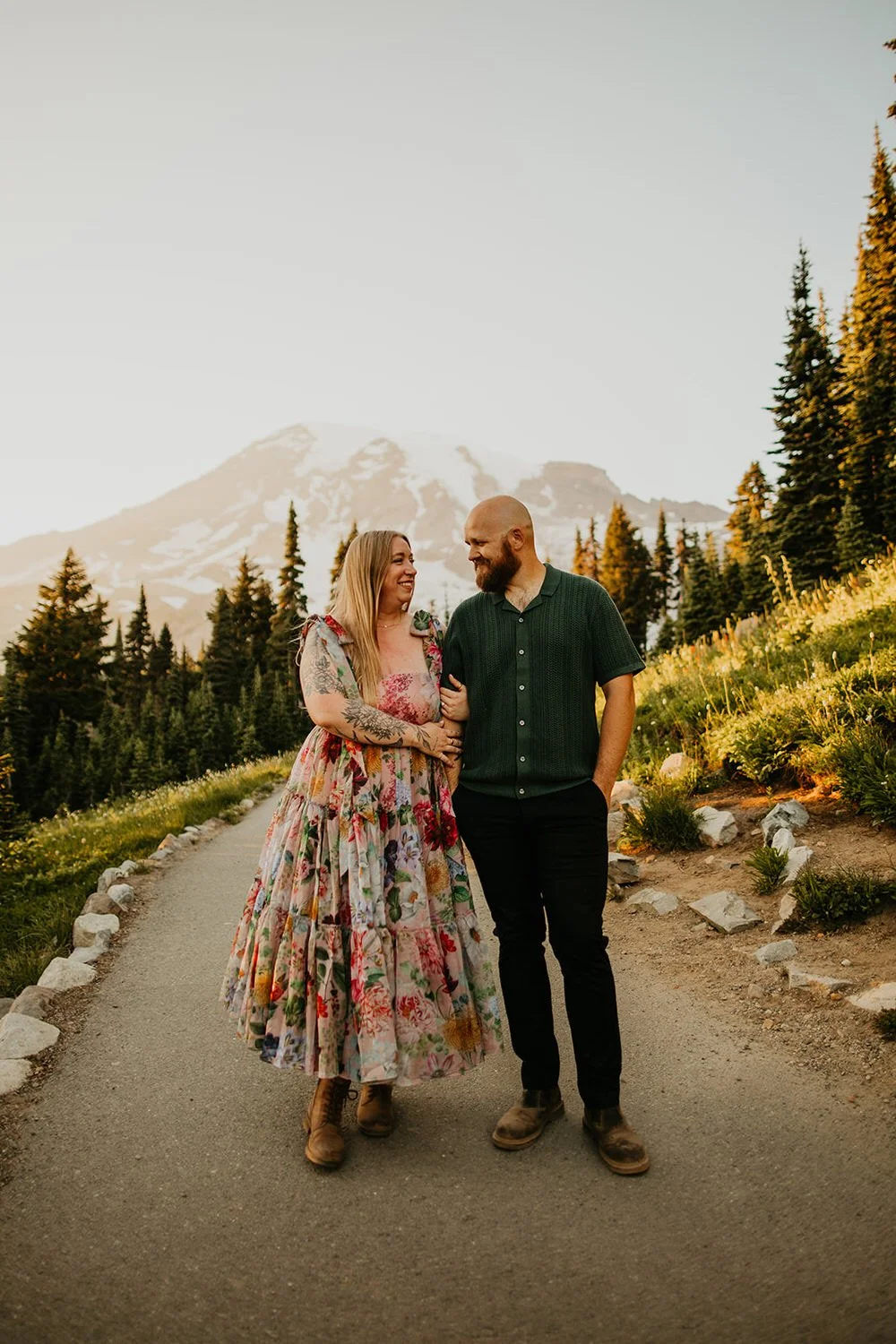
Mount Rainier is iconic. And because of that, it comes with very real logistics that matter.
This is not a show-up-and-wing-it location.
Roads close for much of the year. Weather shifts fast. Snow can linger well into summer. Parking fills early. Some areas are only accessible for a few short months. Timed entry reservations apply in certain seasons and locations. Cell service is unreliable at best.
None of this is meant to scare you off, I promise! It’s just the honest context that makes planning here smoother instead of stressful.
Eloping at Mount Rainier means:
Choosing your season carefully
Understanding which areas are accessible and when
Planning around crowds instead of fighting them
Having backup options that actually make sense
Once you understand how Rainier works, the rest becomes far more manageable. That’s exactly what this guide is here for.
A Quick Note About Me
I didn’t write this guide based on internet research or secondhand advice.
I’m a Washington-based Mount Rainier elopement photographer, and I’ve spent years photographing elopements here in every season the park allows, plus plenty of time exploring the park on my own because Rainier really is that girl.
I know which locations hold up under pressure, which areas get overwhelmed, where weather causes the most issues, and how to build timelines that don’t feel rushed or fragile.
My role goes far beyond taking photos. As a Mount Rainier elopement photographer, I help couples navigate locations, permits, timing, backup plans, and all the quiet logistics that keep the day feeling steady and relaxed. This guide is an extension of that support.
Want that kind of expertise for your elopement? View pricing and more details here.
Why Elope at Mount Rainier National Park
So… why elope here specifically?
Mount Rainier is iconic. And not in a subtle, “you kind of have to know where to look” way. You see her on your flight into Washington, on the drive between Seattle and Tacoma, and basically anywhere you look when you’re above 3,000 feet.
And for a lot of couples, that’s exactly the point.
Rainier feels monumental. It feels grounding. It feels like standing somewhere that matters. Eloping here doesn’t feel like choosing a pretty backdrop, it feels like choosing an experience that’s going to stick with you forever!
Here’s why couples keep choosing Mount Rainier for their elopement ⬇️
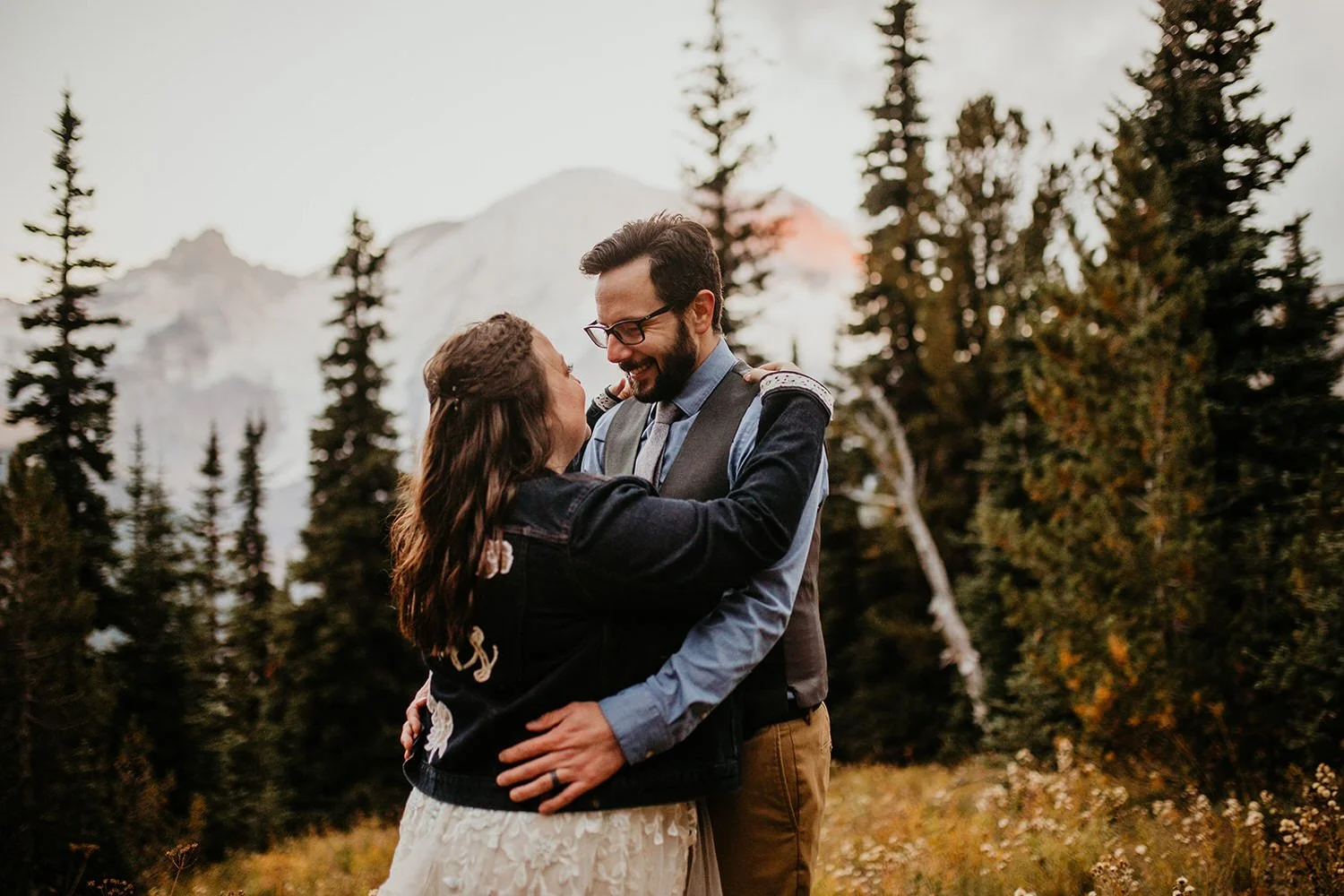
Massive, unmistakable scenery
Rainier is the kind of place that makes people stop mid-sentence and just stare.
This park delivers some of the most iconic mountain scenery in Washington, and the scale of it is hard to fully understand until you’re standing there yourself. The mountain dominates the landscape in a way that feels powerful without being overwhelming.
At Mount Rainier, you can experience:
Wide-open alpine meadows with the mountain towering above you
Dense evergreen forests that feel quiet and grounding
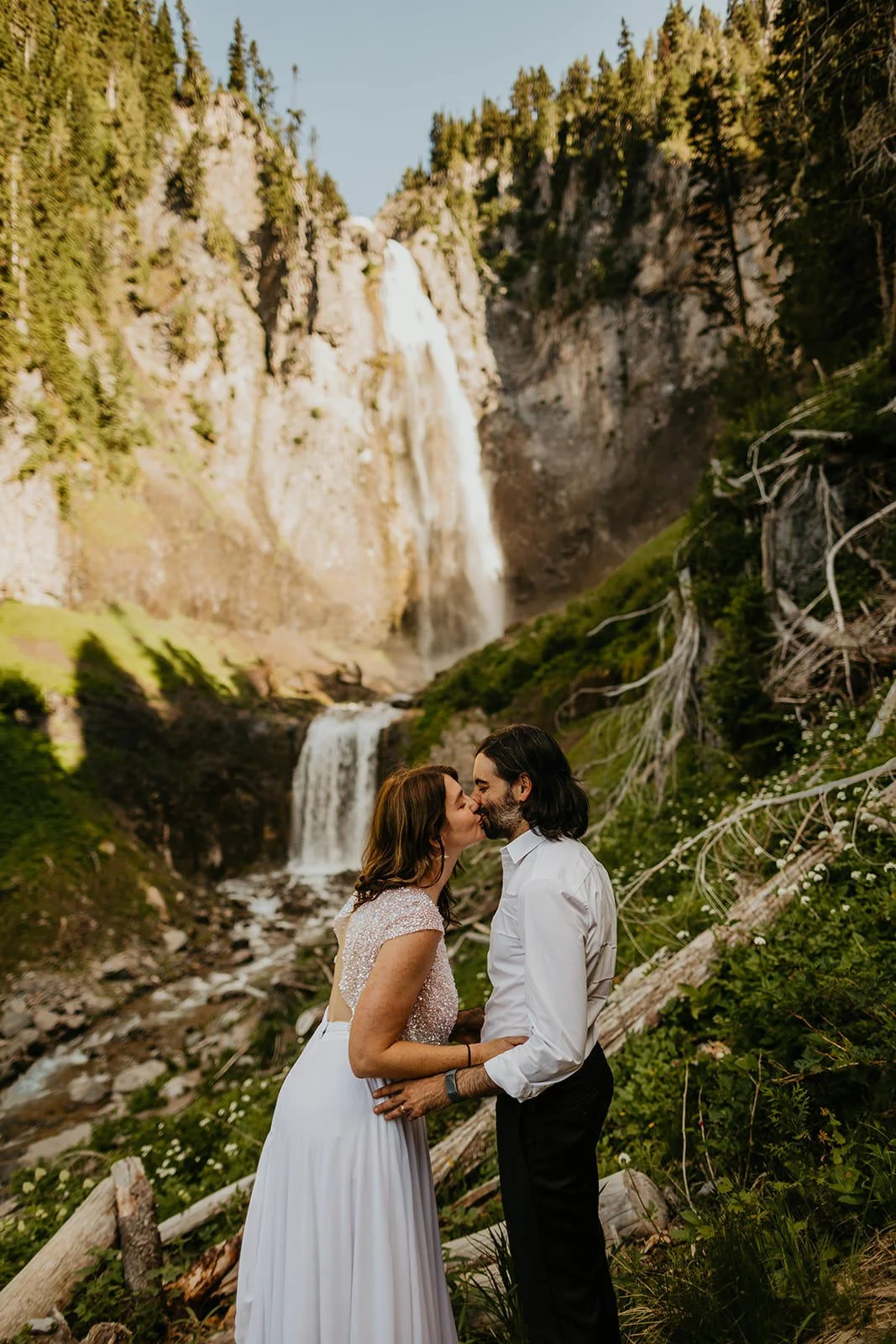
Rivers, waterfalls, and glacial melt flowing year-round
Snowfields and rocky ridgelines at higher elevations
Wildflowers in late summer and deep snow in winter
You don’t have to commit to just one type of scenery. With thoughtful planning, it’s absolutely possible to exchange vows in one setting and take photos somewhere completely different the same day, without hours of driving or feeling rushed. I know how to make that flow work 😉
Accessibility without sacrificing impact
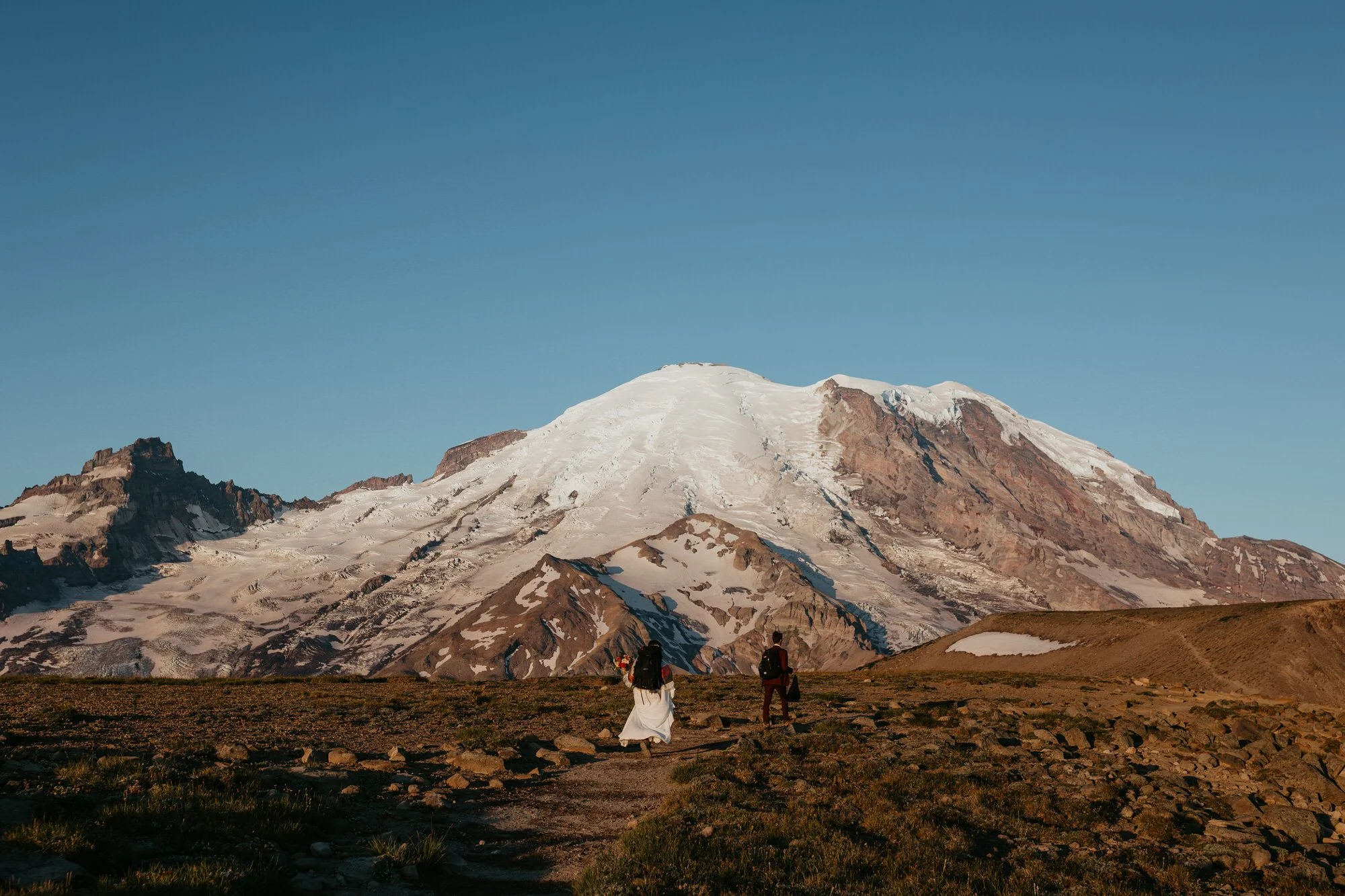
One of the biggest reasons couples choose Rainier is that it offers jaw-dropping views without requiring a massive hike.
There’s a huge range of accessibility here, which makes Rainier incredibly versatile.
There are:
Stunning views right from the parking lot
Short walks to overlooks and meadows with big payoff
Well-maintained trails with gentle elevation gain
Longer hikes for couples who want effort, solitude, and space
This flexibility means Rainier works beautifully whether you want a low-key, easygoing ceremony, something that feels a little more adventurous, or a combination of both. It’s also one of the best national parks in Washington for elopements with a few guests or mixed mobility needs.
A balance of iconic and intentional
Yes, Rainier is popular. It’s one of the most visited national parks in the country. That part is true!
But popularity doesn’t automatically mean chaos.
With the right timing, locations, and expectations, it’s absolutely possible to have an elopement here that feels intentional, calm, and deeply personal.
That can look like:
A sunrise ceremony before the crowds arrive
Choosing quieter areas instead of the most famous pullouts
Weekday elopements that feel surprisingly peaceful
Letting the day unfold slowly instead of hopping from spot to spot
Rainier rewards couples who are willing to plan thoughtfully. When you do, it doesn’t feel like you’re sharing your vows with the internet, it feels like you’re having a moment that just happens to be set somewhere extraordinary.
If you love big mountains but want fewer crowds, you may want to explore eloping in the North Cascades!
Seasons that completely change the vibe
Mount Rainier is not a one-note park. It transforms dramatically throughout the year.
Each season brings a totally different feel:
Summer is lush, vibrant, and full of life
Early fall is quieter, cooler, and more grounded
Winter turns Rainier into a bold, snow-covered wonderland
Spring is moody, dramatic, and wildly unpredictable
Seasonality here isn’t just about how things look, it’s about how the day feels. If atmosphere and emotion matter to you as much as scenery, choosing the right season at Rainier makes a huge difference.
If you’re looking for an elopement location with less drama between seasons, I’d recommend learning about eloping at Olympic National Park and what lower-elevation spots have to offer!
We’ll get into exactly what that looks like next.
Back to top ⬆️
Best Time to Elope at Mount Rainier
There is no single “best” time to elope at Mount Rainier for every couple out there, sorry folks. There is a best time for your priorities, your comfort level, and the kind of experience you want to have on your elopement day.
Rainier is extremely affected by elevation, snowpack, road access, and visitor volume, which means seasonality matters a lot here. A date that looks perfect on paper can feel completely different in real life depending on the time of year.
Below is a realistic breakdown of what each season at Mount Rainier actually looks like, not the Instagram version.
Summer (July–September)
Summer is peak season at Mount Rainier for a reason! This is when the park is at its most accessible, most vibrant, and honestly, most chaotic.
By mid-July, most major roads are open, high-elevation areas are snow-free, and wildflowers start popping off in Paradise, Sunrise, and along alpine trails. Long daylight hours make it easier to build relaxed timelines, and the mountain is out more consistently than other times of year.
What summer brings:
Open roads and trail access across most of the park
Peak wildflowers from late July through August
Lush greenery and full waterfalls
The widest range of location options
But here’s the real talk.
Summer also brings crowds. A lot of them.
Parking lots fill early, sometimes shockingly early. Popular areas like Paradise and Sunrise can feel busy by 8am on weekends. Trails that look peaceful in photos may be packed midday.
What to keep in mind:
Crowds are unavoidable at popular locations
Sunrise ceremonies and weekdays make a massive difference
Strategic planning matters more than almost any other season
Summer is an excellent choice if you want maximum access and flexibility and are willing to plan around people instead of fighting them.
Fall (Late September–October)
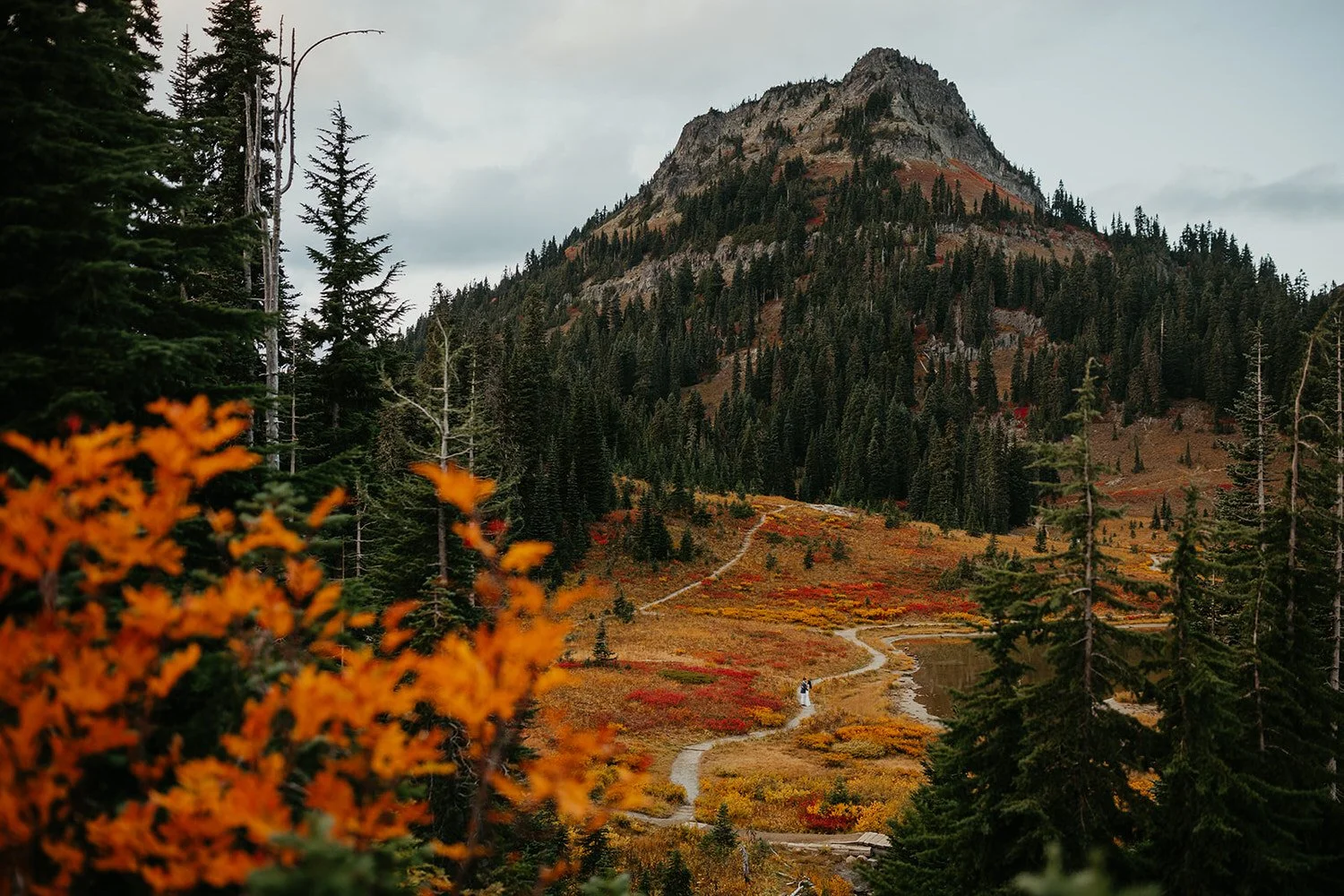
Early fall is one of my favorite times to elope at Mount Rainier, especially for couples who want a calmer, more grounded experience.
After mid-September, visitor numbers drop off noticeably. Temperatures cool down, the park feels quieter, and the overall pace slows. While Rainier isn’t known for dramatic fall foliage the way the North Cascades are, certain areas still pick up beautiful fall color, and the lack of crowds alone makes this season incredibly appealing.
Late September often brings:
Cooler temperatures
Fewer visitors and easier parking
A more peaceful, intimate feel
That said, fall at Rainier always comes with a bit of a gamble.
What to watch for:
Early snowfall can happen with little warning
Roads and high-elevation areas may close suddenly
Weather can shift fast, especially later in October
If you’re flexible and okay with backup plans, fall can be a really special time to elope here without the summer chaos.
Back to top ⬆️
Winter (November–March)
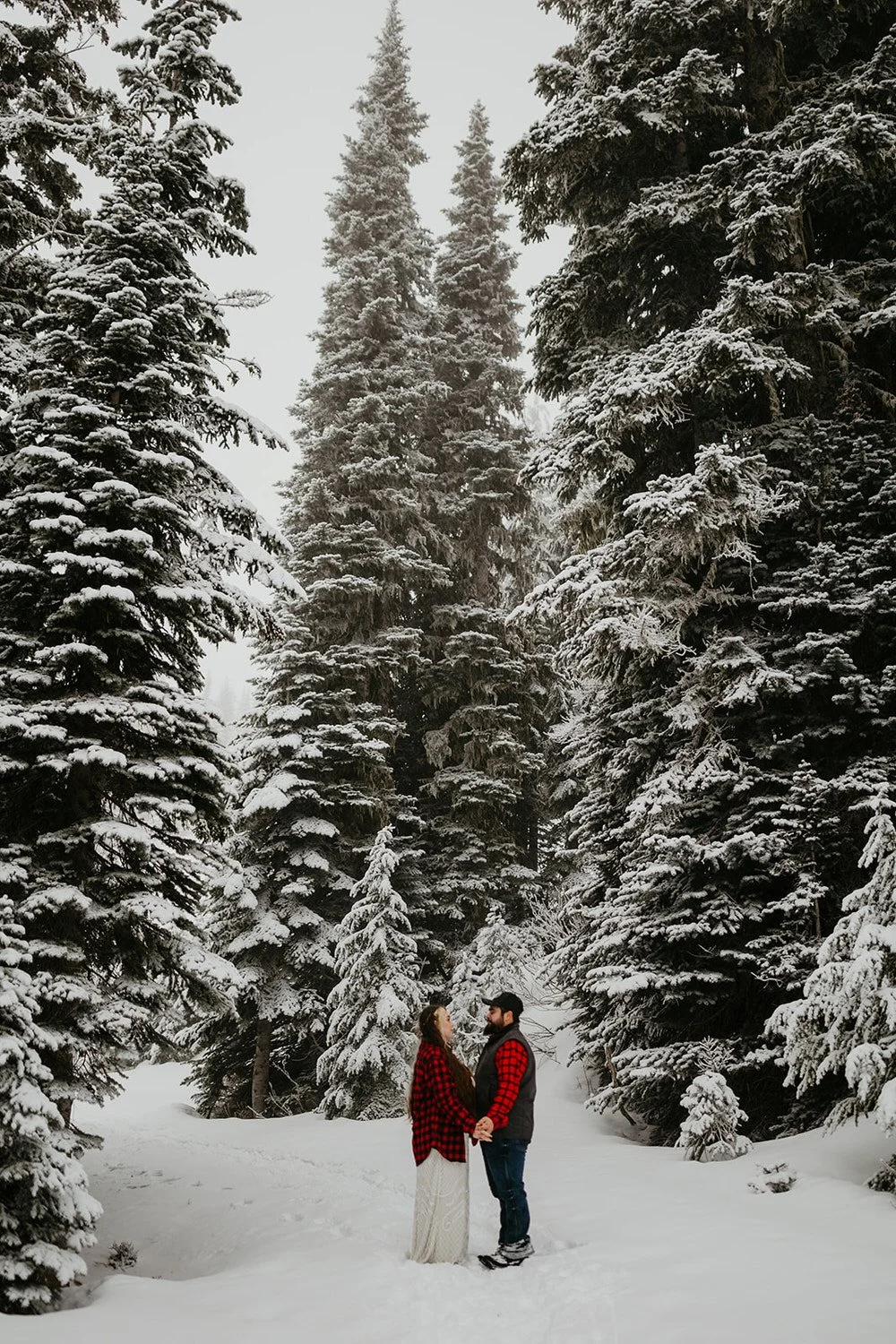
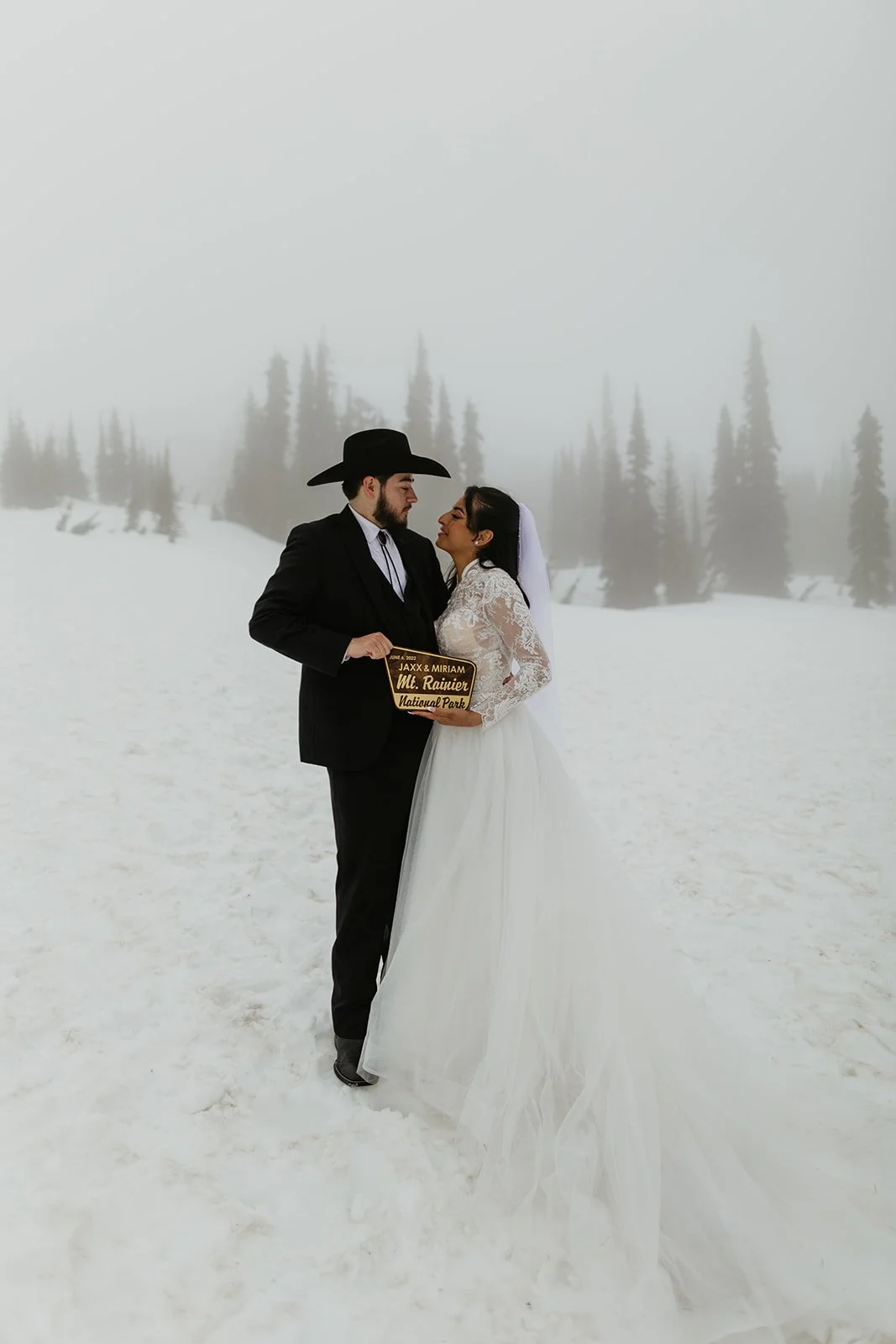
Winter elopements at Mount Rainier are dramatic, snowy, and absolutely not for everyone.
Snow transforms the park into a completely different place. Many roads close for the season, access becomes limited, and travel requires more time, intention, and preparation. Areas like Paradise remain accessible for snowshoeing, but everything moves slower in winter, and that’s part of the experience.
What winter offers:
Deep snow and a true winter wonderland
Far fewer people, especially midweek
A bold, quiet, almost surreal atmosphere
Winter also comes with real requirements.
What it takes:
Comfort with cold temperatures and snow travel
Snowshoes, microspikes, or other winter gear
Flexible timelines and location options
A strong emphasis on safety and access
Winter is best for couples who want something intimate, quiet, and adventurous, and who care just as much about the experience as they do about the photos.
Spring (April–June)
Spring at Mount Rainier is unpredictable in the truest sense.
You might get sunshine and vibrant green forests.
You might get fresh snow and freezing temperatures.
You might get both in the same week!
Snow lingers at high elevations well into summer, often through June or even early July, which means many iconic areas remain inaccessible long after spring officially starts elsewhere.
Spring often looks like:
Roads opening later than expected 👎🏻
Lower elevations becoming accessible first 👍🏻
Moody weather and dramatic skies
Limited alpine access
Spring works well if:
You’re flexible with locations
You’re okay with dramatic, unpredictable conditions
You care more about experience than specific scenery
This season is less about chasing a certain look and more about embracing whatever Rainier decides to give you.
If you’re reading this and thinking, “Okay, I love Rainier, but I have no idea which season actually makes sense for us,” that’s completely normal. Choosing a season and date is something I help couples with all the time, and you don’t have to figure it out alone.
Back to top ⬆️
Where to Elope at Mount Rainier National Park
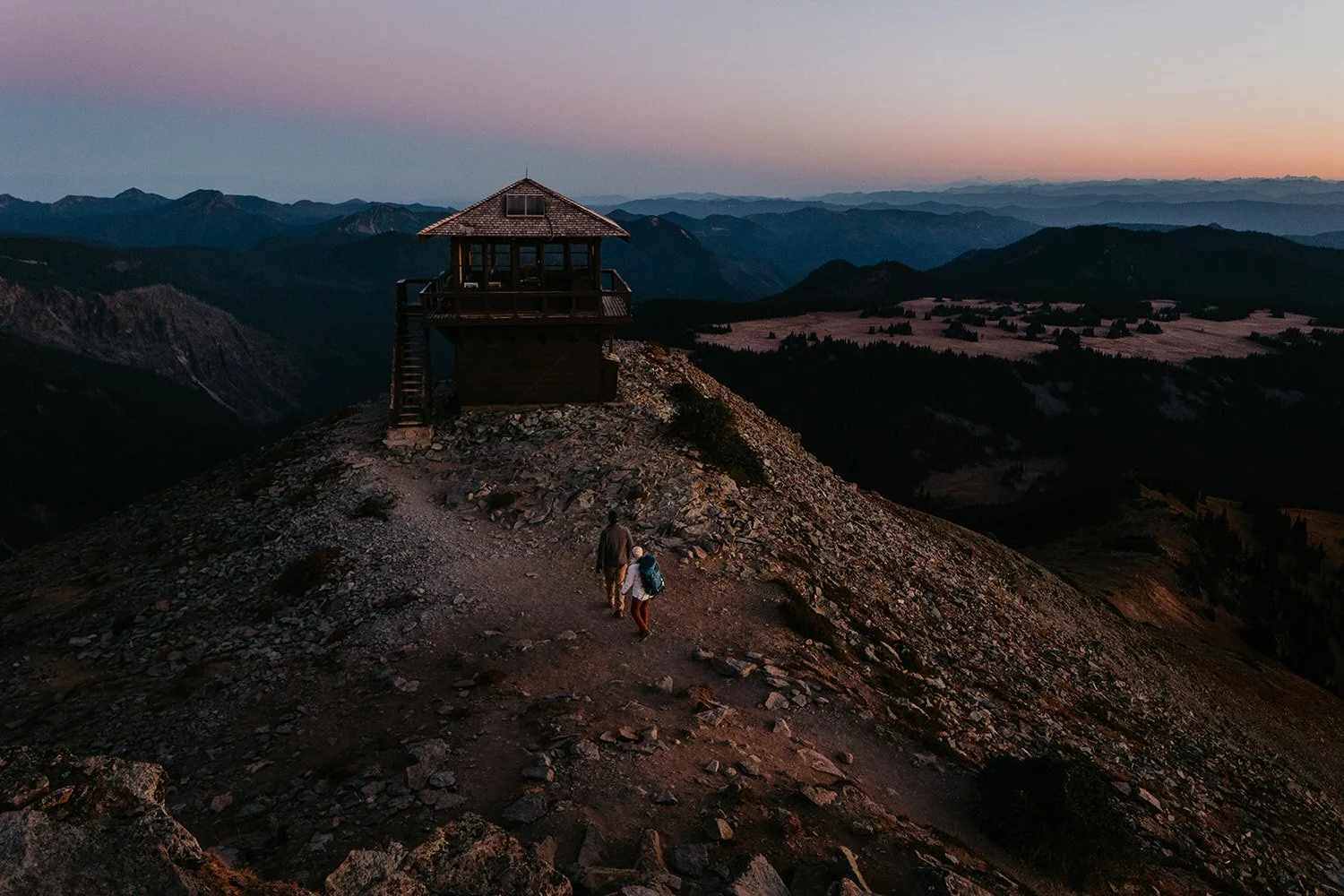
The short answer: almost anywhere 💁🏻♀️
The longer, actually helpful answer: there is a best place for you, and it depends entirely on how you want the day to feel!
Do you want:
Zero hiking with jaw-dropping views
A short walk that still makes you say “holy shit”
Something that feels a little more earned, with solitude baked in
Good news: Mount Rainier can do all of that! You just have to know where to look (and when).
See an all-day Mount Rainier elopement here.
Here are the main areas I help couples consider for their Rainier elopement, plus the honest, non-brochure version of each.
Paradise Area
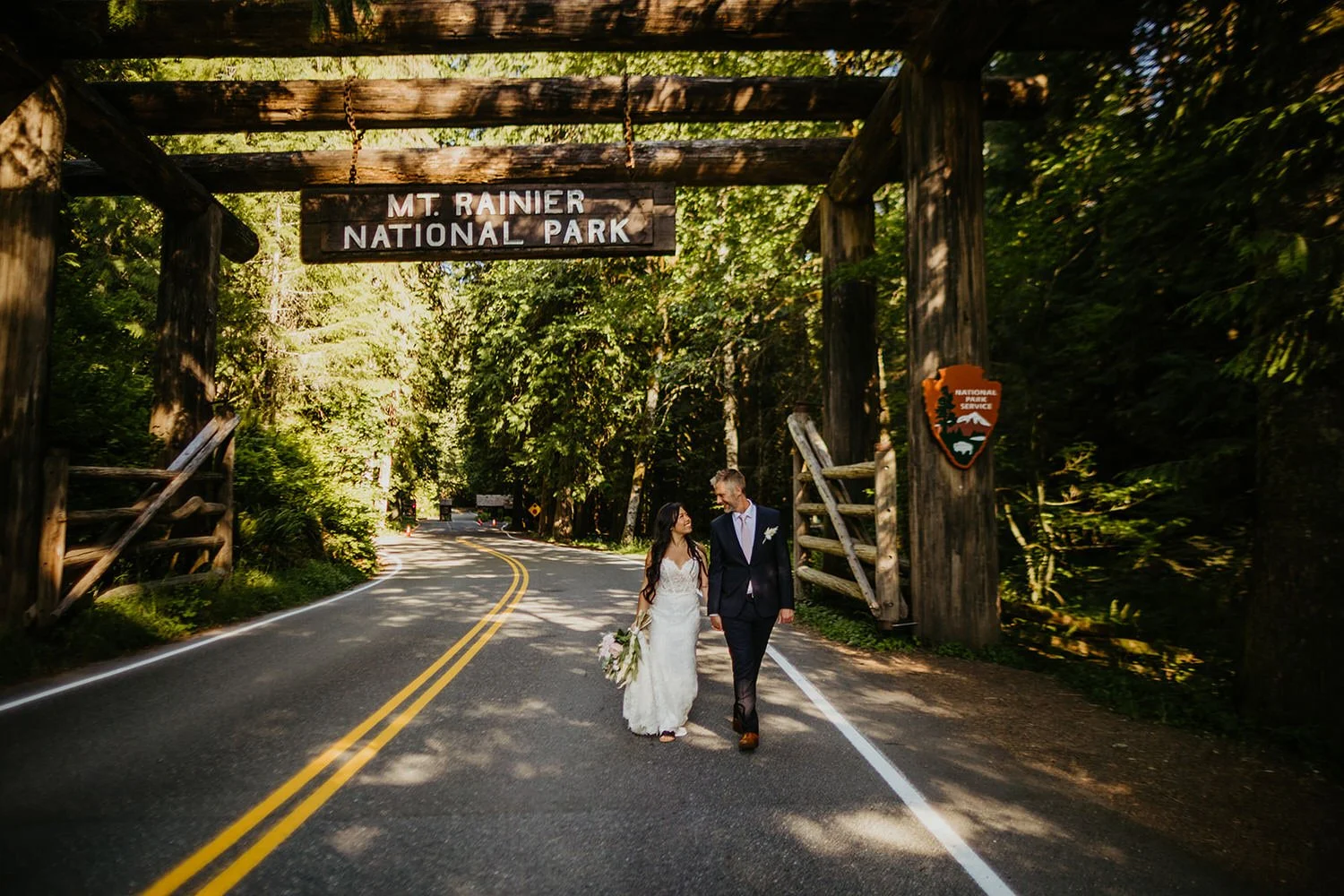
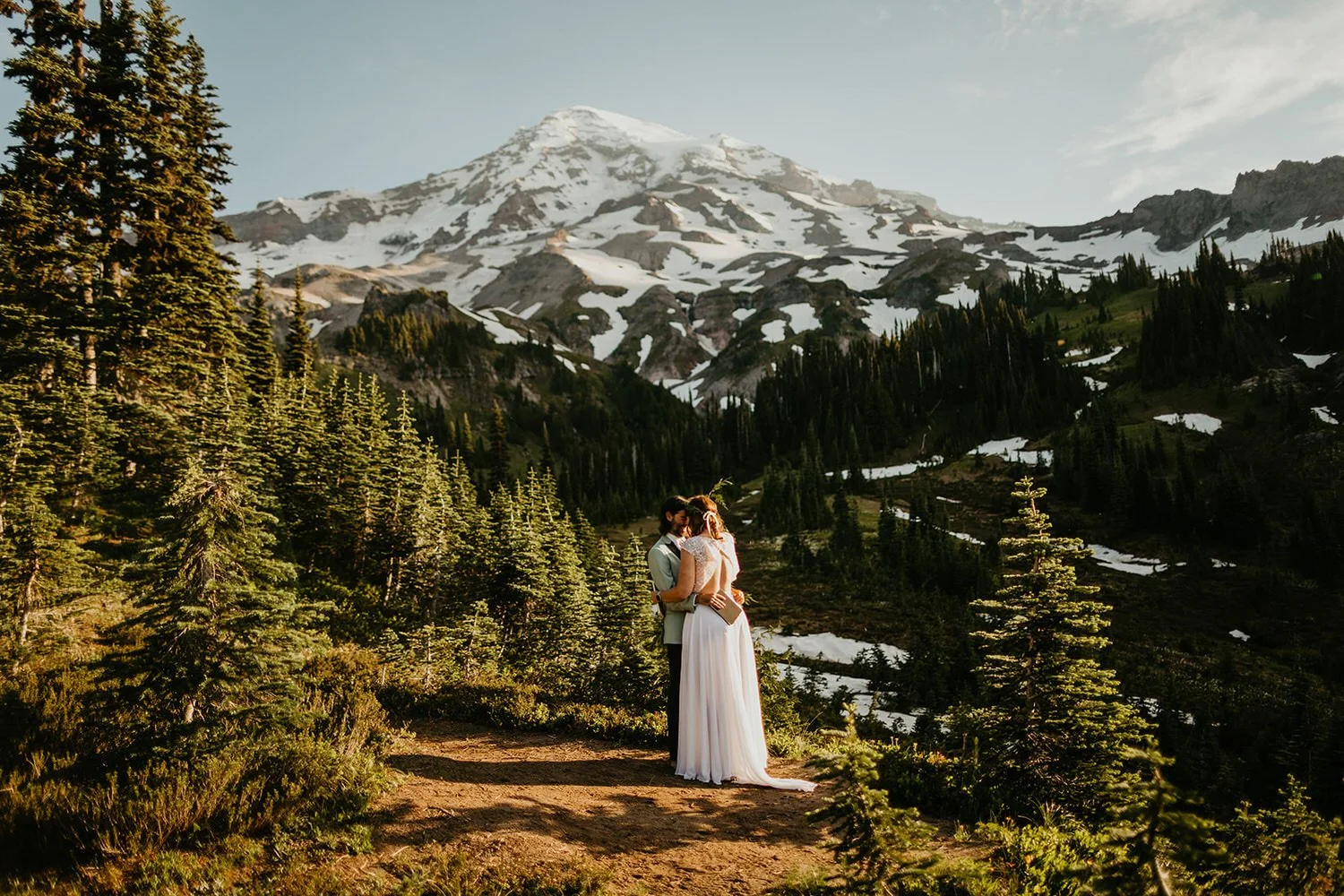
Paradise is the most iconic area of Mount Rainier, and yes, it earns the hype.
This is where you get those classic, postcard-level views of the mountain rising straight out of alpine meadows. In late summer, the wildflowers go absolutely feral in the best way, and even a short walk from the parking lot can feel unreal.
Why couples love Paradise:
Immediate, in-your-face views of Mount Rainier
Alpine meadows, wildflowers, and open skies
Short trails with massive payoff
But here’s the real talk.
Paradise is also the busiest area of the entire park. Parking fills early, tour buses roll through, and midday can feel… not very elopement-y.
What actually makes Paradise work:
Sunrise ceremonies
Weekdays instead of weekends
Choosing quieter pullouts or trails instead of the most obvious spots
When you plan it right, Paradise can feel magical instead of chaotic. When you don’t, it can feel like you’re getting married in the background of someone’s family vacation. Timing is everything here!
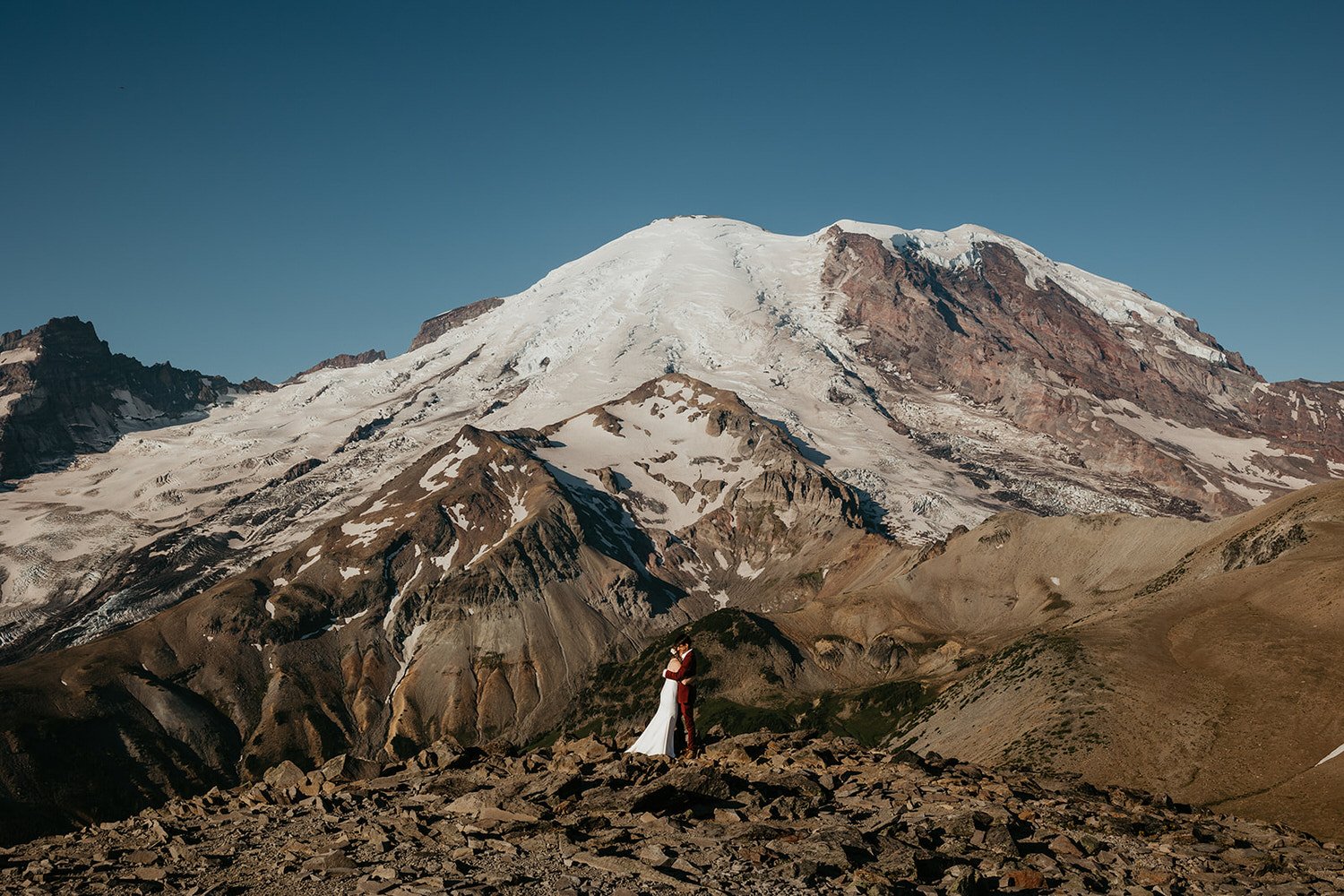
Sunrise Area
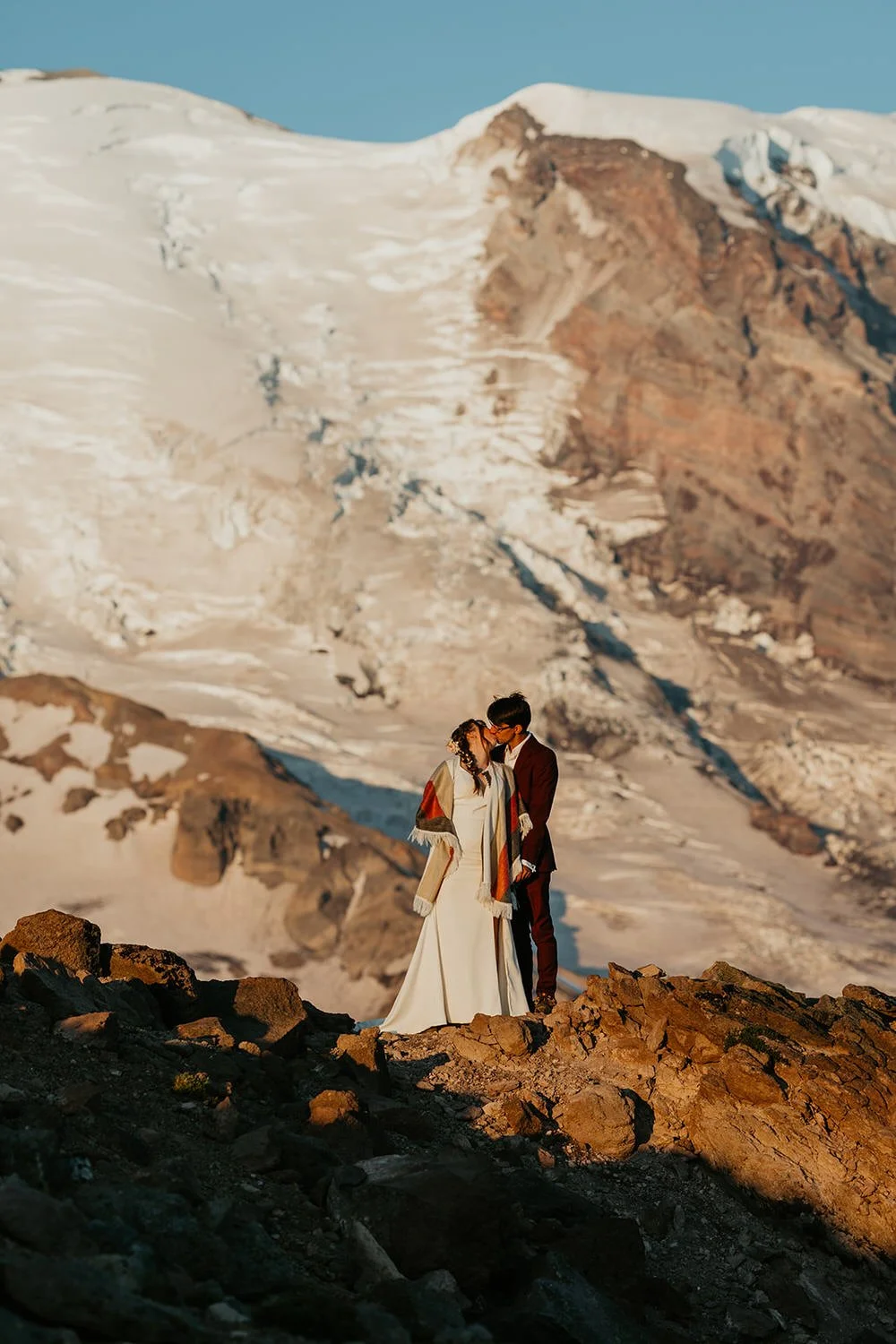
Sunrise sits at the highest elevation you can reach by car in the park, and it feels completely different from Paradise.
From up here, you’re looking across the landscape rather than straight up at the mountain. The views feel expansive, rugged, and alpine, and the light at sunrise and sunset is unreal.
The first time I visited the Sunrise area, I cried tears of wonder because it honestly felt like I could reach out and touch the summit of Rainier from where I was standing. You can’t skip Sunrise, I’m telling you!
Why couples gravitate toward Sunrise:
Wide-open views and dramatic ridgelines
Cooler temperatures in peak summer
Some of the best sunrise light in the park
Things to know before you fall in love with it:
Access is extremely seasonal, usually only from early July through early October
Timed entry requirements may apply depending on the year
Weather can shift fast at this elevation
Sunrise is an amazing option if you want big alpine energy without a long hike, but it requires flexibility and a solid backup plan in case the road doesn’t open when expected.
Back to top ⬆️
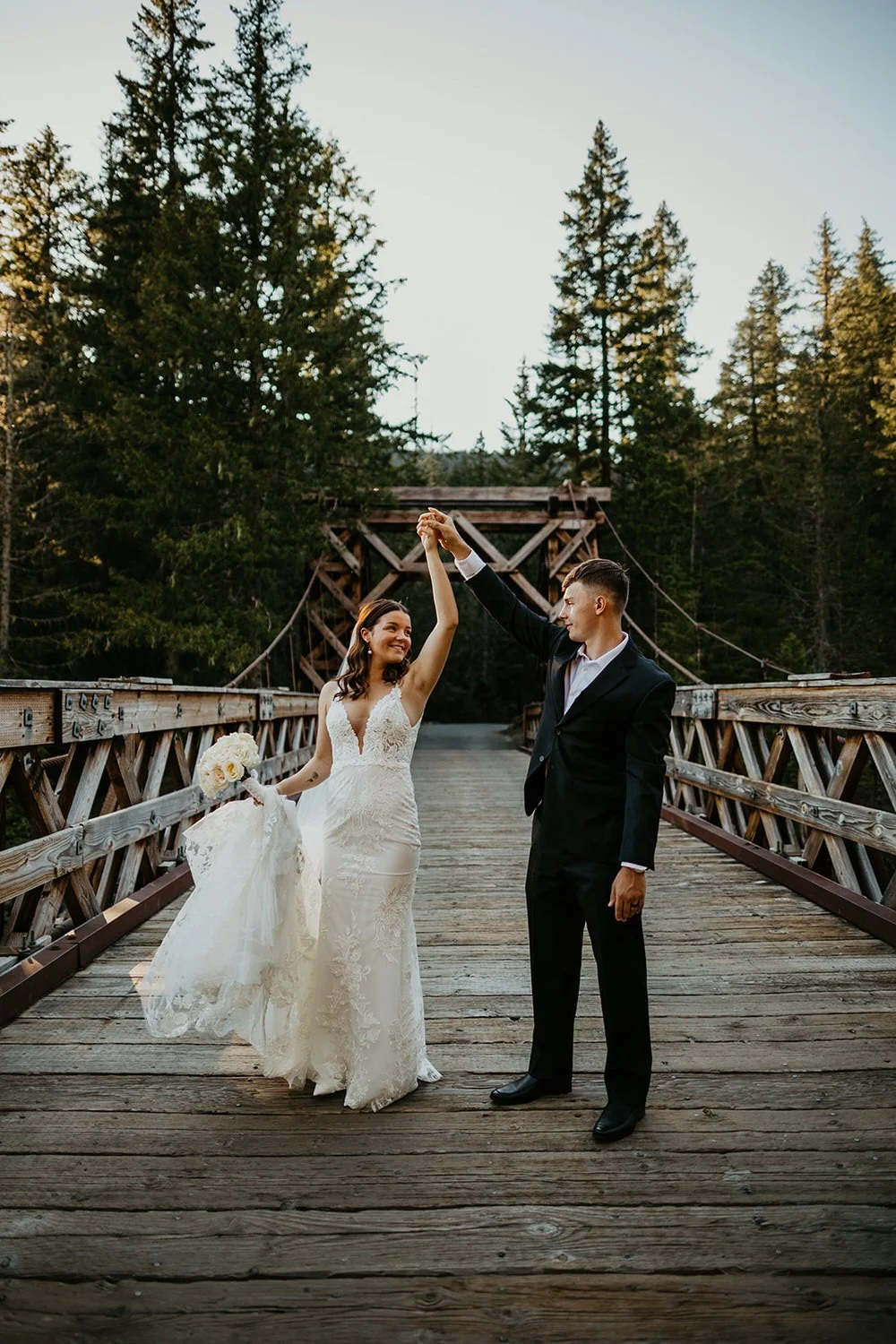
Longmire Area
Longmire is the quiet, grounded counterbalance to Paradise and Sunrise.
This area is lower elevation, more forested, and feels calmer overall. You’ll find rivers, historic buildings and a wooden suspension bridge, and trails that wind through old-growth forest rather than open alpine terrain.
Longmire works well if you want:
A quieter, less hectic atmosphere
Easy access and short walks
River views and forested scenery
It’s especially great for couples who prefer a more intimate, cozy vibe or who are eloping earlier or later in the season when higher elevations are less accessible.
Ohanapecosh Area
Located on the southeast side of the park, Ohanapecosh feels like stepping into a completely different world.
This area is lush, green, and full of old-growth forest, rushing rivers, and waterfalls. It’s also one of the least crowded parts of Mount Rainier, which makes it a favorite for couples who want privacy without effort.
Why I love Ohanapecosh elopements:
Towering trees and mossy forest vibes
Waterfalls and river access
Fewer people and a slower pace
If you’re not married to the idea of open meadows and want something more intimate, moody, and forest-forward, this area is absolutely worth considering.
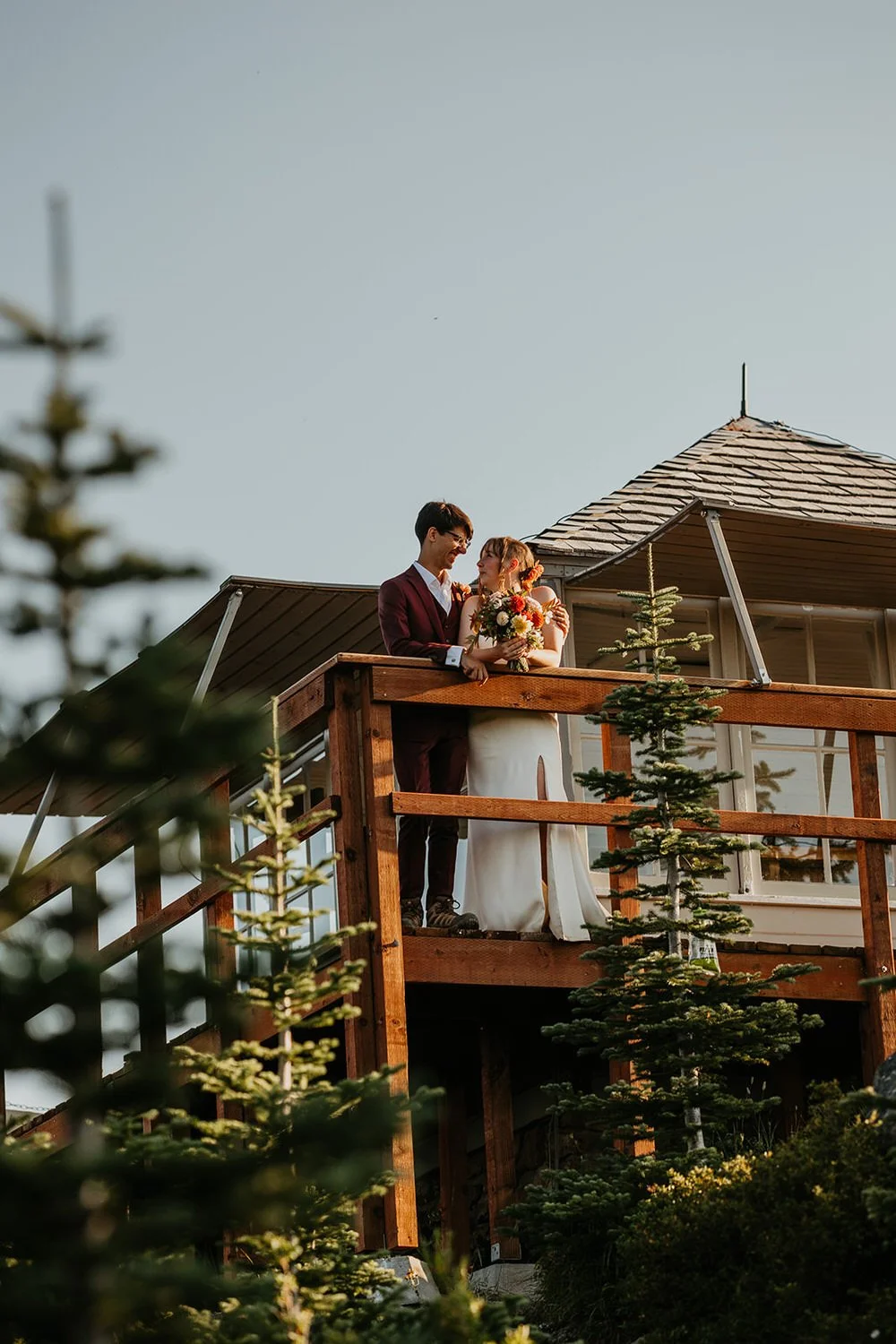
Locations Outside Mount Rainier National Park
Some of my favorite Rainier-area elopements don’t actually happen inside the national park at all, but usually do have stellar views of Rainier all the same.
The surrounding Gifford Pinchot National Forest and Mount Baker-Snoqualmie National Forest offer incredible scenery with fewer crowds and, in many cases, more flexibility.
Why national forest locations are clutch:
Way fewer people
Fewer hoops to jump through
More flexibility with permits
Just as beautiful, sometimes even quieter
If you love the idea of Rainier-level scenery but want a little more breathing room, these spots are often the perfect compromise.
If you’re currently thinking, “Cool cool cool… but how the hell do I choose?” you’re not doing it wrong. Narrowing down the right location based on season, access, privacy, and safety is a huge part of what I help my couples with.
Back to top ⬆️
Permits and Fees for a Mount Rainier Elopement
Ah yes. Permits. Everyone’s favorite part of planning an elopement. /s
The good news? This is way more manageable than it sounds, and I’ll walk you through exactly what actually applies to you so you’re not spiraling through park websites at 11pm.
What permits you need depends on where you elope within the Rainier area. Mount Rainier National Park is very regulated (for good reason), and knowing which rules apply to which locations is key.
Let’s break it down.
Eloping inside Mount Rainier National Park
If your ceremony takes place anywhere within Mount Rainier National Park boundaries, you’ll need a Special Use Permit.
Here’s the quick breakdown:
Cost: $250, plus a $25 non-refundable application fee
Required for ceremonies of any size
Apply at least 4 weeks in advance (earlier is always better)
The application is submitted directly through the park
This permit covers things like:
Approved ceremony locations
Group size limits
Making sure your plans align with park regulations
It’s not meant to be a barrier or a hassle. It’s simply how the park manages impact and keeps things from turning into absolute chaos! Fair enough.
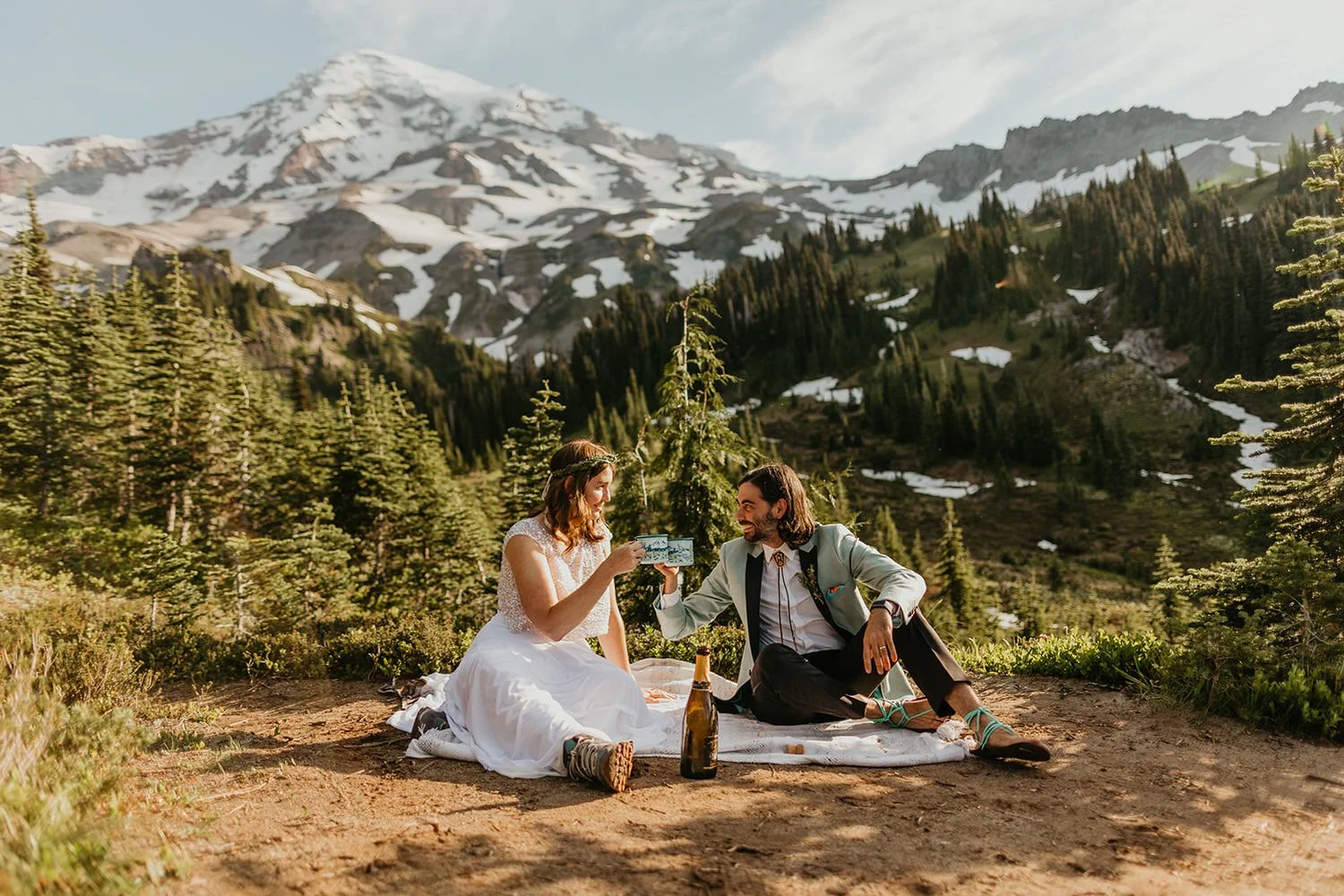
Eloping outside the park (national forest land)
Some gorgeous Rainier-area elopement locations actually fall outside the national park boundaries and into national forest land.
If you’re eloping in areas managed by Gifford Pinchot National Forest or Mount Baker–Snoqualmie National Forest, you’ll still need permission in most cases, but the process usually looks a little different than it does inside the park.
What to expect:
A permit or written approval is still required in most situations
Many forest permits are free or low-cost
The process is often simpler and faster than national park permits
Yes, you still need to apply. No, you cannot skip this part just because it’s “just the two of you.” Rangers do check, and we are absolutely not starting your marriage with a fine or an awkward conversation mid-ceremony!
Park entrance fees
Mount Rainier National Park does have an entrance fee.
Currently, it’s $30 per vehicle, or you can use an America the Beautiful annual pass, which grants access to all U.S. National Parks for a year.
If you’re eloping with guests who arrive in separate vehicles, they’ll each need to pay the entrance fee or have their own pass.
A quick reality check
Permits aren’t optional, and they’re not something I recommend trying to DIY without understanding the rules first.
Different areas of Rainier have different requirements, and getting it wrong can mean:
Being asked to move your ceremony at the last minute
Getting fined or denied access
Having a ranger show up during your vows (truly not the vibe)
Helping couples figure out exactly which permits they need, where they can legally elope, and when to apply is something I do all the time.
Back to top ⬆️
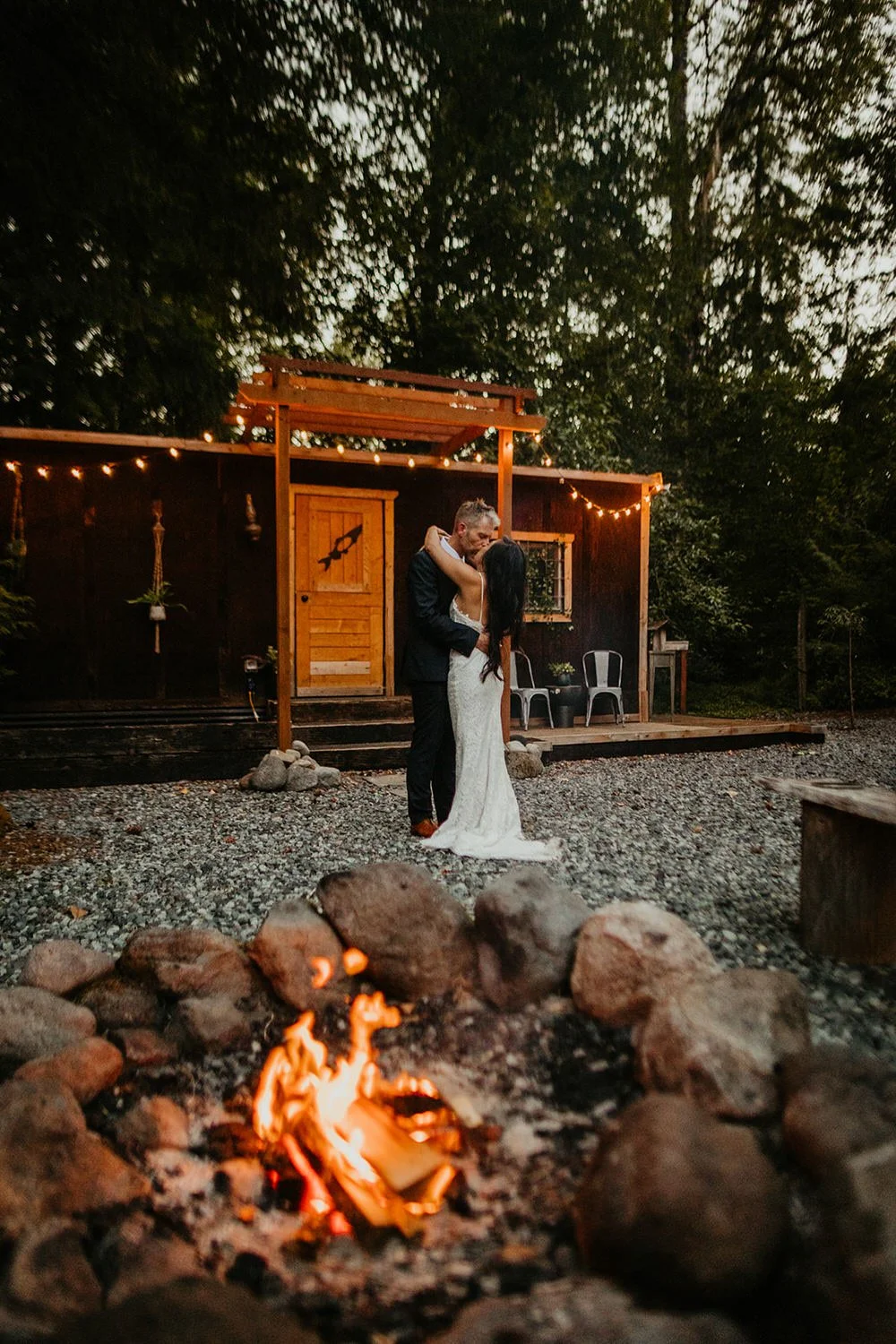
Where to Stay Near Mount Rainier
Lodging options depend heavily on which area of the park you’re eloping in.
Staying close matters more than people expect, especially for sunrise ceremonies or shoulder-season elopements.
Cabins and Vacation Rentals
Longmire / Paradise area
Look for cozy A-frame cabins or modern mountain cabins near Ashford or Elbe if you want easy access to Paradise and the southwest side of the park. Many of these offer hot tubs and forested privacy that work beautifully for post-elopement relaxing.
Sunrise area
Cabins and small lodges near Crystal Mountain or Greenwater are your best bet for Sunrise access. Expect a more alpine feel and cooler temperatures.
Ohanapecosh / Packwood area
Packwood is full of charming cabins and vacation rentals, from modern A-frames to rustic mountain homes, and makes an excellent base for southeast Rainier elopements.
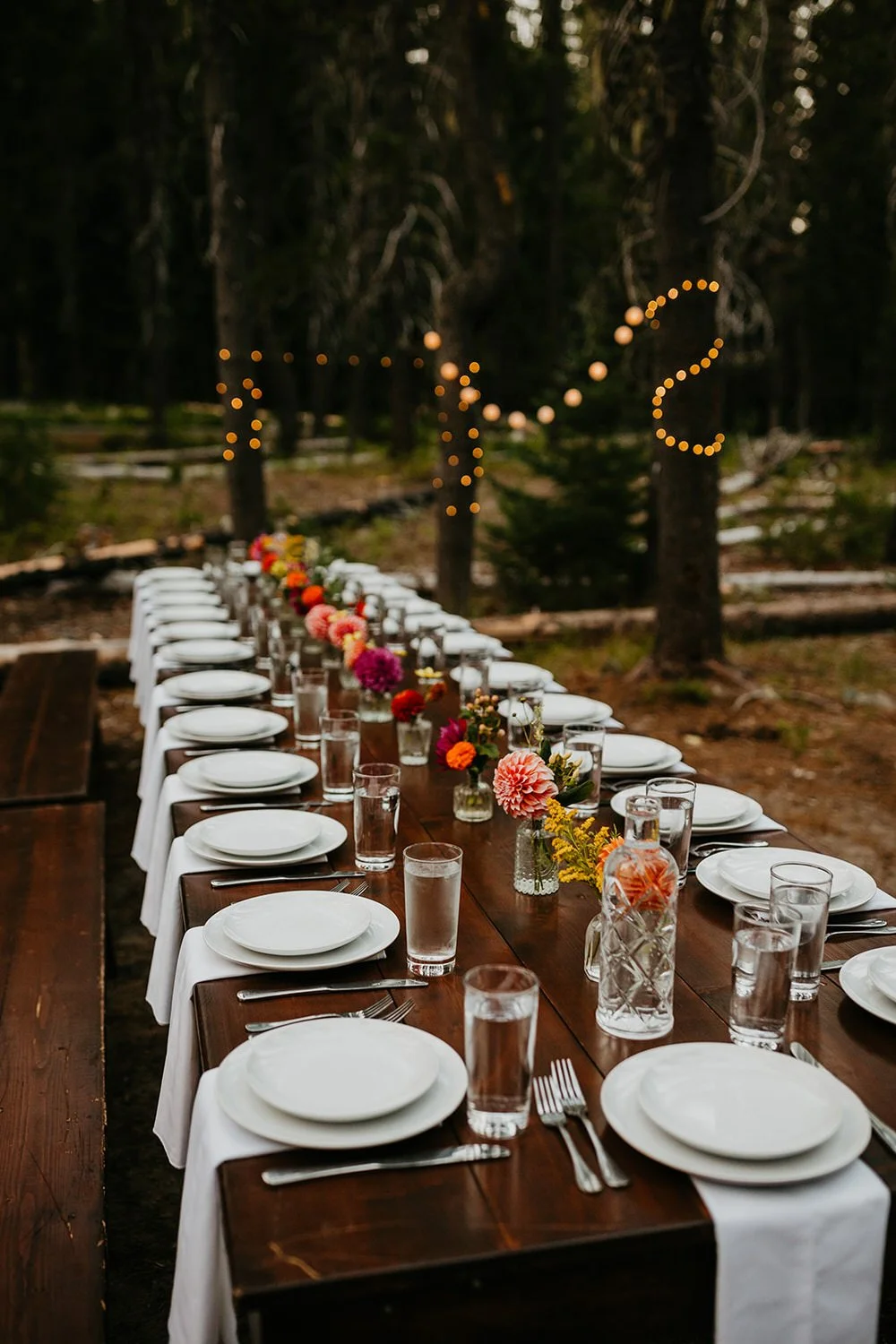
Campgrounds:
Longmire/Paradise area
Cougar Rock Campground or Big Creek Campground
Sunrise area
White River Campground (first come, first serve), Silver Springs Campground, or Lodgepole Campground
Ohanapecosh/Packwood area
Ohanapecosh Campground or La Wis Wis Campground
Hotels/Inns:
Longmire/Paradise area
Paradise Inn or National Park Inn
Sunrise area
Ohanapecosh/Packwood area
Mountain View Lodge or Hotel Packwood
Drive times can be deceptive due to winding roads and seasonal closures, so location matters.
Back to top ⬆️
Washington Marriage License Basics
The legal side of eloping at Mount Rainier is thankfully one of the simpler parts of planning, but there are a few details you’ll want to understand ahead of time so nothing catches you off guard.
Here’s the quick-and-dirty version.
You’ll apply for your marriage license through any county in Washington state. It does not need to be the county where Mount Rainier is located.
Washington has a three-day waiting period. From the day you apply and pay for your license, you must wait three full days before you can legally get married. Same-day ceremonies aren’t allowed.
Your marriage license is valid anywhere in Washington, including Mount Rainier National Park and surrounding national forest land.
You’ll need two witnesses and an officiant present to sign the license. If you’re eloping without guests, this is never an issue and we can easily make it work.
After your ceremony, the officiant is responsible for submitting the completed license to the county for processing.
That’s it. Truly!
If you want a more detailed walkthrough, including step-by-step instructions, common mistakes, and exactly how the paperwork flows, I’ve written a full guide on how to legally elope in Washington that you can check out next.
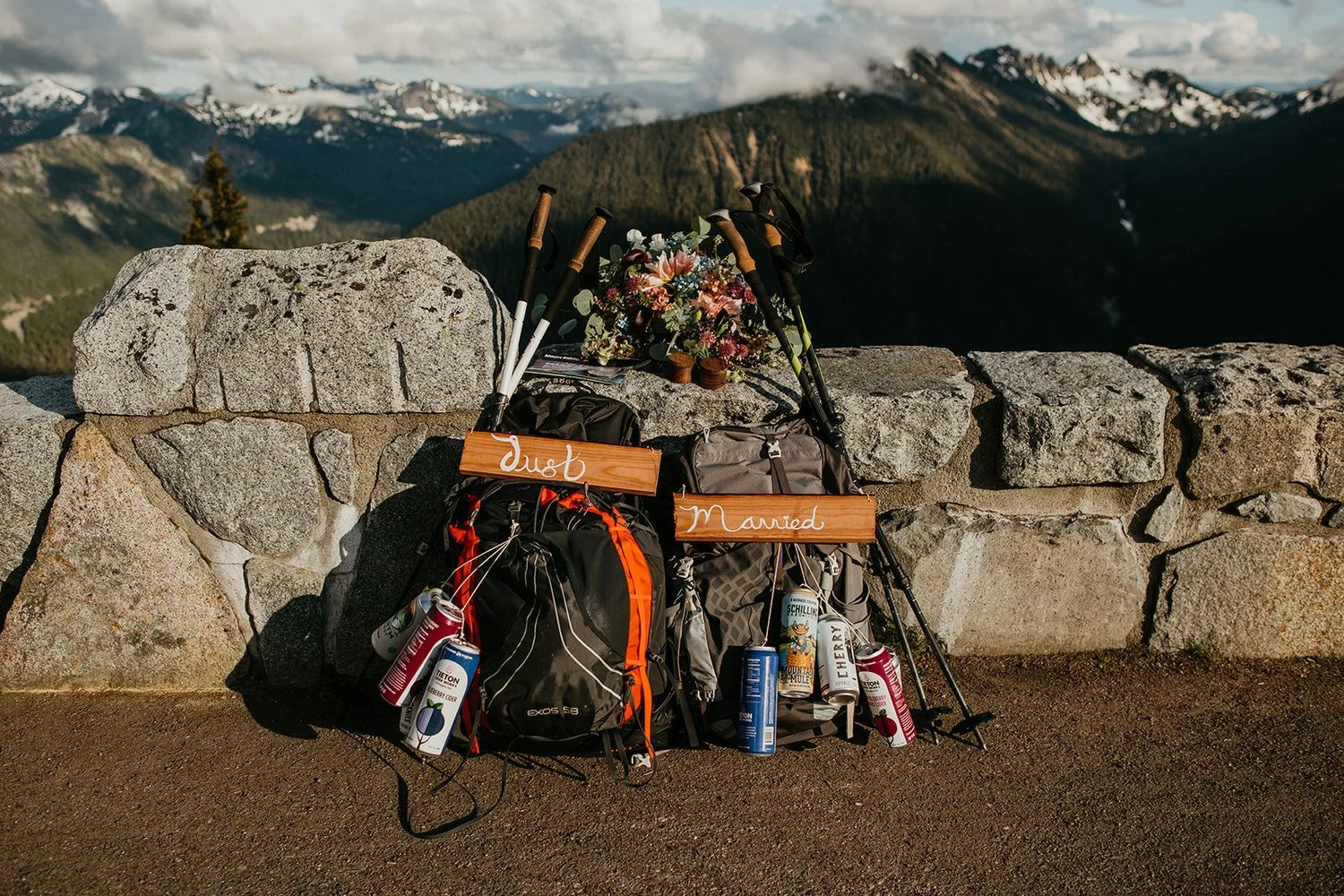
What to Pack for a Mount Rainier Elopement
Eloping at Mount Rainier is not the same as getting married in a venue or someone’s backyard. Elevation plays a role, weather can change quickly, and being comfortable is key if you actually want to enjoy your day instead of just surviving it!
You’ll remember your outfits and rings. This list is for all the other things people don’t think about until it’s almost too late.
Clothing and layers (yes, even with wedding clothes)
Layers are non-negotiable at Rainier. Even in peak summer.
Plan to bring:
A warm layer like a puffy jacket or fleece
A waterproof outer layer or rain shell
Gloves and a beanie if you’re eloping at sunrise, sunset, or outside of midsummer
Sturdy shoes with good traction
It’s very normal for Rainier to feel sunny, windy, and cold all within the same hour. Staying warm and dry goes a long way toward feeling relaxed, grounded, and comfortable in your photos.
Safety and practical essentials
This is the category people love to skip… until they really shouldn’t.
Make sure you have:
Plenty of water and snacks (hangry vows are still not the vibe)
Sunscreen and bug spray
A headlamp or flashlight if we’ll be out near sunrise or sunset
Bear spray
A compact mirror and makeup for quick touch-ups
Even if your ceremony spot is close to the car, you’re still in a mountainous, remote environment. We treat it accordingly.
Fun extras that make the day feel special
These aren’t required, but they’re highly encouraged!
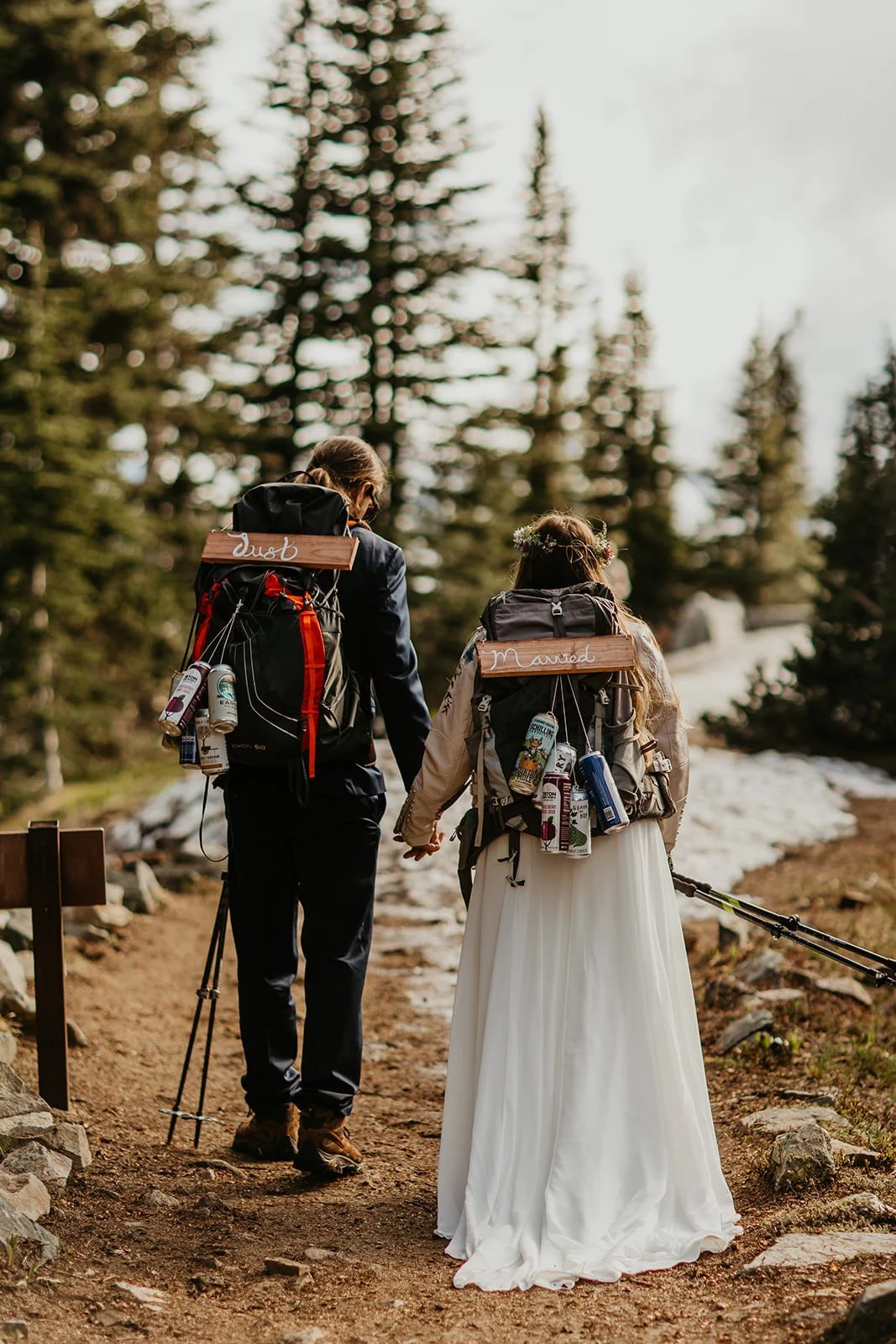
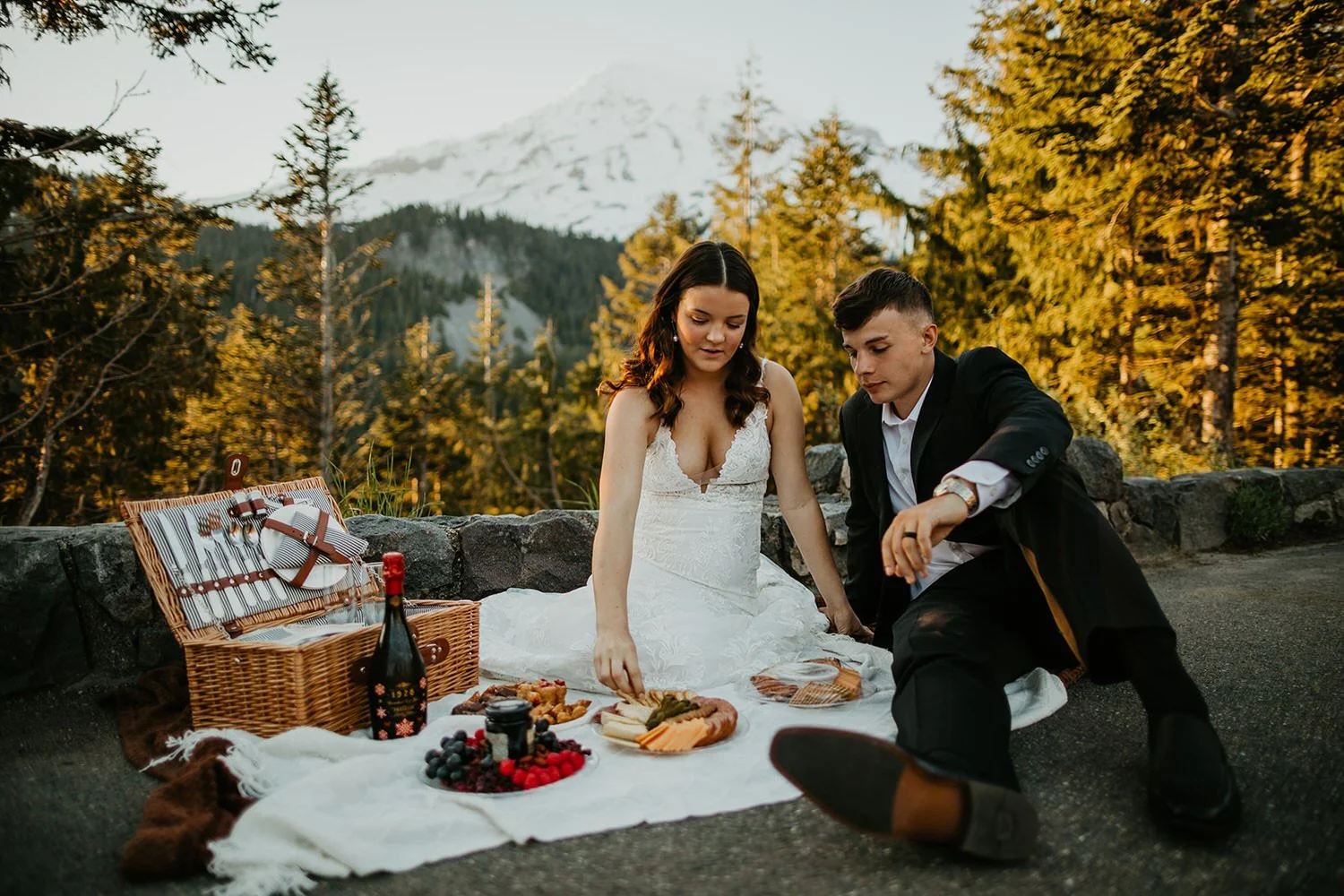
A celebratory drink to crack open after the ceremony
A small picnic or charcuterie moment
Handwritten vows on something sturdier than loose paper
A playlist downloaded offline for a first dance or dance break
These little additions help the day feel intentional and unrushed, instead of like you’re bouncing from location to location.
What I always bring as your photographer
You’re not doing this alone. I show up prepared so you don’t have to worry about every possible “what if.”
I always have:
Multiple camera bodies and backup gear
The 10 hiking essentials
Extra layers, water, and snacks
A first aid kit
Bobby pins, safety pins, hair ties, and a comb
I also keep additional gear in my car to help keep you comfortable throughout the day. My goal is for you to feel taken care of so you can stay present, enjoy the experience, and actually soak in what you’re doing.
Back to top ⬆️
Leave No Trace and Ethical Eloping at Mount Rainier
I care deeply about this park. Which is exactly why Leave No Trace is non-negotiable for elopements here!
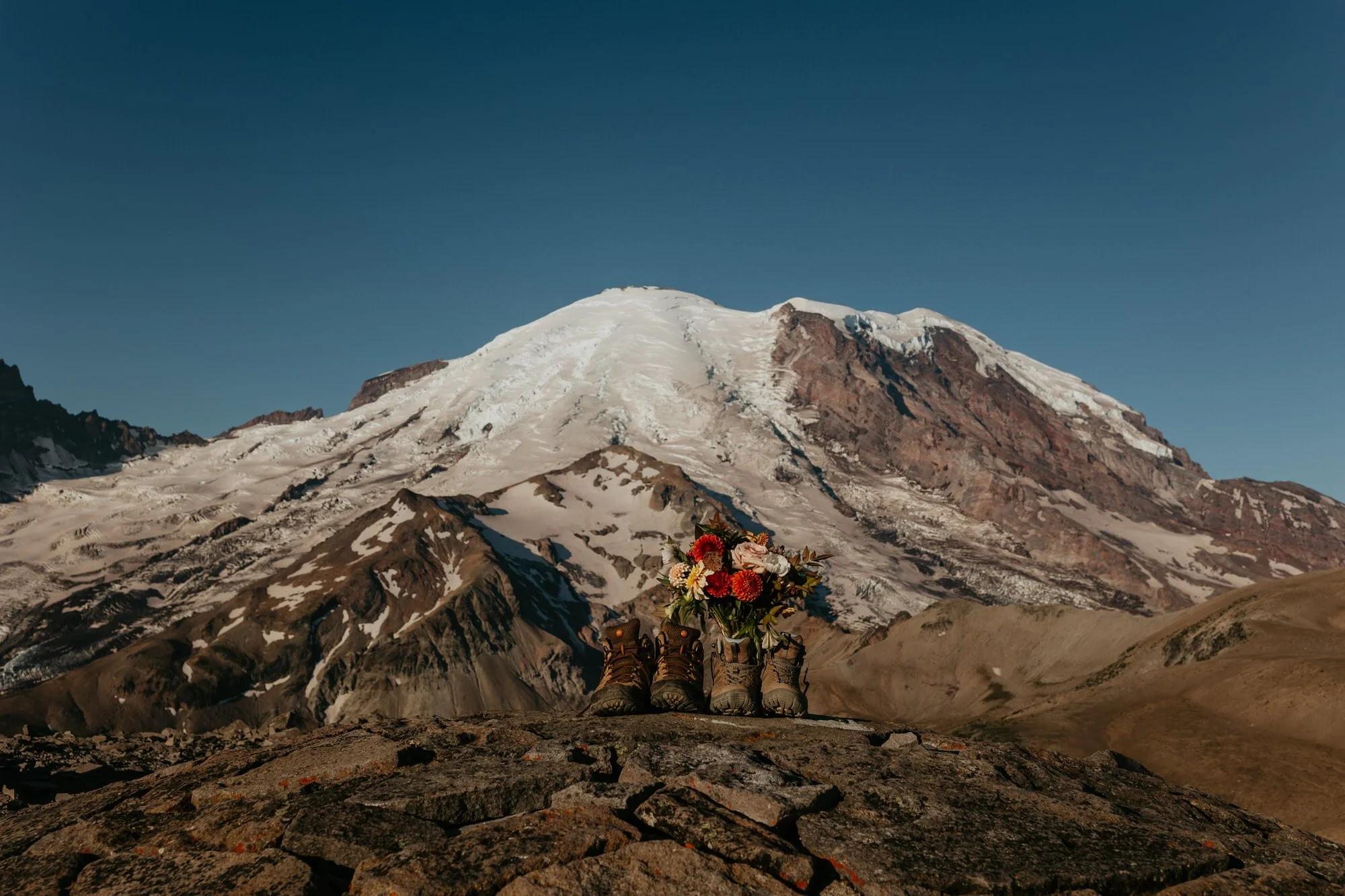
Mount Rainier’s landscapes are iconic, but they’re also incredibly fragile. Alpine meadows, subalpine forests, and volcanic terrain don’t bounce back quickly from damage. Eloping here comes with a responsibility to protect the place you’re choosing for something as meaningful as your wedding day.
The goal is simple: celebrate in a way that doesn’t harm the park or future visitors.
I follow Leave No Trace principles on every Rainier elopement, and I guide my couples through what that actually looks like in real life, not just on paper!
Stay on trail (especially in alpine areas)
Those wildflower meadows at Rainier are stunning, and they’re also extremely delicate.
Stepping off trail, even briefly, can crush plants that take years or decades to recover. Alpine environments here are especially slow to heal.
We stay on established trails, use durable surfaces, and get creative with angles so it looks like you’re surrounded by wildflowers without ever touching them. You get beautiful photos and the landscape stays intact. Everyone wins.
Leave everything exactly as you found it
This one’s simple, but important.
No confetti (even the “biodegradable” kind).
No flower petals.
No décor left behind.
No “just one little thing.”
If it didn’t grow there naturally or come with you, it leaves with you. That includes:
Trash
Food scraps
Champagne corks
Decorative items
If you want to celebrate with confetti or something festive, we save it for pavement, your Airbnb, or somewhere it won’t cause harm. Or you could use bubbles or poppable streamers!
Respect wildlife and other visitors
Mount Rainier is still public land. Your elopement is a huge moment for you, but it’s also just another day for hikers, families, and visitors who deserve to enjoy the park too!
That means:
We don’t block trails
We don’t ask people to move for photos
We keep ceremonies low-impact and respectful
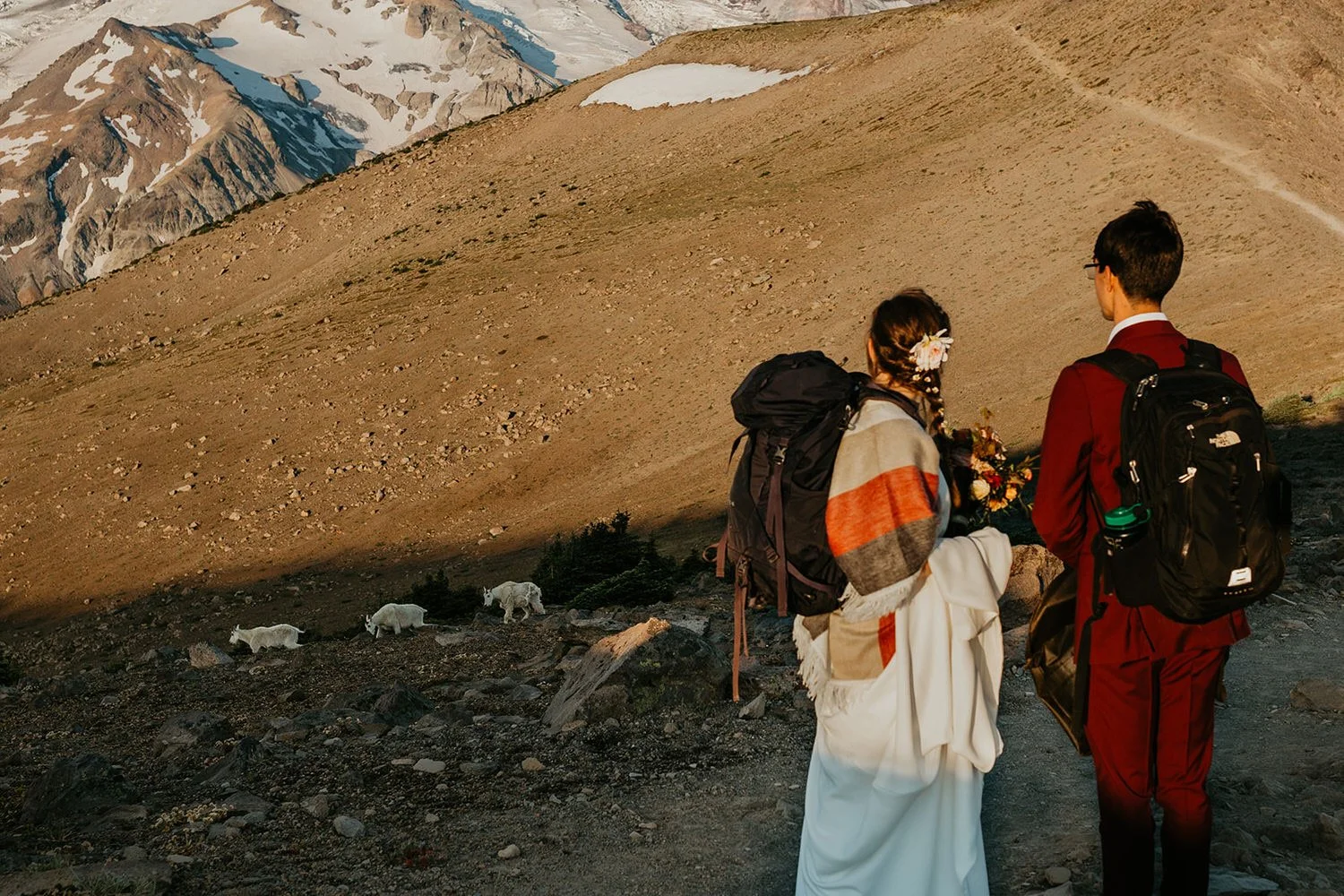
As for wildlife, we give animals plenty of space and let them do their thing. No chasing, feeding, or “just one quick photo with the bear” situations. I’ve got a long lens and a lot of patience. We don’t need to get close 🤪
Plan ahead so nothing goes sideways
A big part of Leave No Trace is preparation.
At Rainier, that means:
Knowing where ceremonies are allowed
Bringing the right gear and layers
Planning around weather, snowpack, and daylight
Having backup locations and timelines
This isn’t about limiting your experience. It’s about making sure your day feels calm, safe, and intentional from start to finish.
Want to go deeper?
If ethics and stewardship matter to you as much as the views, I’ve written a much more detailed guide on Leave No Trace for elopements. It dives into the nuances, common mistakes, and how to celebrate outdoors without causing harm.
Back to top ⬆️
Mount Rainier Elopement FAQ
➡️ Do we need a permit to elope at Mount Rainier?
Yes. If your ceremony takes place anywhere within Mount Rainier National Park, you’ll need a $250 Special Use Permit (plus paying a $25 application fee). This applies even if it’s just the two of you. The permit helps the park manage impact and make sure ceremonies happen in appropriate locations. I walk couples through exactly what they need and when to apply so nothing slips through the cracks.
➡️ Can we elope at Mount Rainier without any hiking?
Absolutely! Mount Rainier has plenty of stunning locations that are accessible with little to no hiking. There are also short walks with big payoff and longer hikes for couples who want something more adventurous. Choosing the right spot comes down to your comfort level, your guests’ needs, the season, and the overall vibe you want for the day.
➡️ How many guests can we bring to our elopement?
Guest limits depend on your permit and the specific location within the park. Some areas only allow groups up to 8 people total (including you two and your photographer), while others allow up to 75 people but require you to use specific locations like amphitheaters and picnic areas. If having guests is important to you, we’ll factor that in early and choose locations that make sense for your group size without compromising the experience.
➡️ Is Mount Rainier too crowded for an elopement?
Mount Rainier is a popular park, but that doesn’t mean your elopement has to feel crowded. Timing, location choice, and flexibility make a huge difference. Sunrise ceremonies, weekdays, and less obvious areas can feel surprisingly peaceful, even in peak season.
➡️ What if the weather is bad on our elopement day?
Weather is part of the deal at Mount Rainier, and having a plan matters. I always help couples build timelines and backup options that account for weather shifts, visibility, and road access. A cloudy or misty day doesn’t mean a ruined elopement. Some of the most emotional and beautiful days happen in imperfect conditions! Read my full guide to eloping in ‘bad’ weather here.
➡️ Can we bring our dog to our Mount Rainier elopement?
Pets are very limited within Mount Rainier National Park. Dogs are only allowed in certain developed areas and are not permitted on most trails. If bringing your dog is a priority, we can look at nearby national forest locations that offer more flexibility and still have incredible scenery.
➡️ How far in advance should we start planning?
Ideally, a few months ahead gives you the most flexibility with permits, locations, and lodging. That said, I’ve also helped couples plan beautiful Mount Rainier elopements in much shorter timeframes! If you have a date in mind or a tight timeline, don’t hesitate to reach out and I’ll let you know what’s possible.
Back to top ⬆️
Hiring a Mount Rainier Elopement Photographer
Eloping at Mount Rainier National Park is not the time to wing it with someone who’s never dealt with mountain weather, road closures, permits, or timelines that depend on daylight and snowpack.
“Leading up to our Mount Rainier elopement, Van made everything SO easy for us and kept us on track and on schedule. On the day itself, she was even more amazing to work with in person and made my husband feel completely relaxed, even though he had never worked with a professional photographer before. Every time I look at our photos, I’m taken back to that magical day.” - Jenny and Travis after their Paradise elopement
You want a photographer who:
Knows how this region actually works
Can help you choose locations that make sense for your season and comfort level
Stays calm when plans shift (because they will)
Handles the logistics quietly so you don’t have to
My role goes way beyond taking photos. I help with location guidance, permits, timelines, backup plans, and creating an experience that feels relaxed instead of rushed or stressful.
If you’re excited about eloping here but don’t want to figure out every detail alone, you’re in the right place. When you’re ready, reach out to start the conversation ❤️
Big scenery. Zero chaos.
Back to top ⬆️